

ETFE Section: Design, Structure and Performance Explained
What is an ETFE section? An ETFE section is a cross-sectional representation of an ETFE roofing or façade system, showing how ETFE cushions, supporting frames, air pressure, insulation, and drainage work together. It helps architects, engineers, and clients understand the construction and performance of lightweight building envelopes.
ETFE Section: How Does the Structure Work?
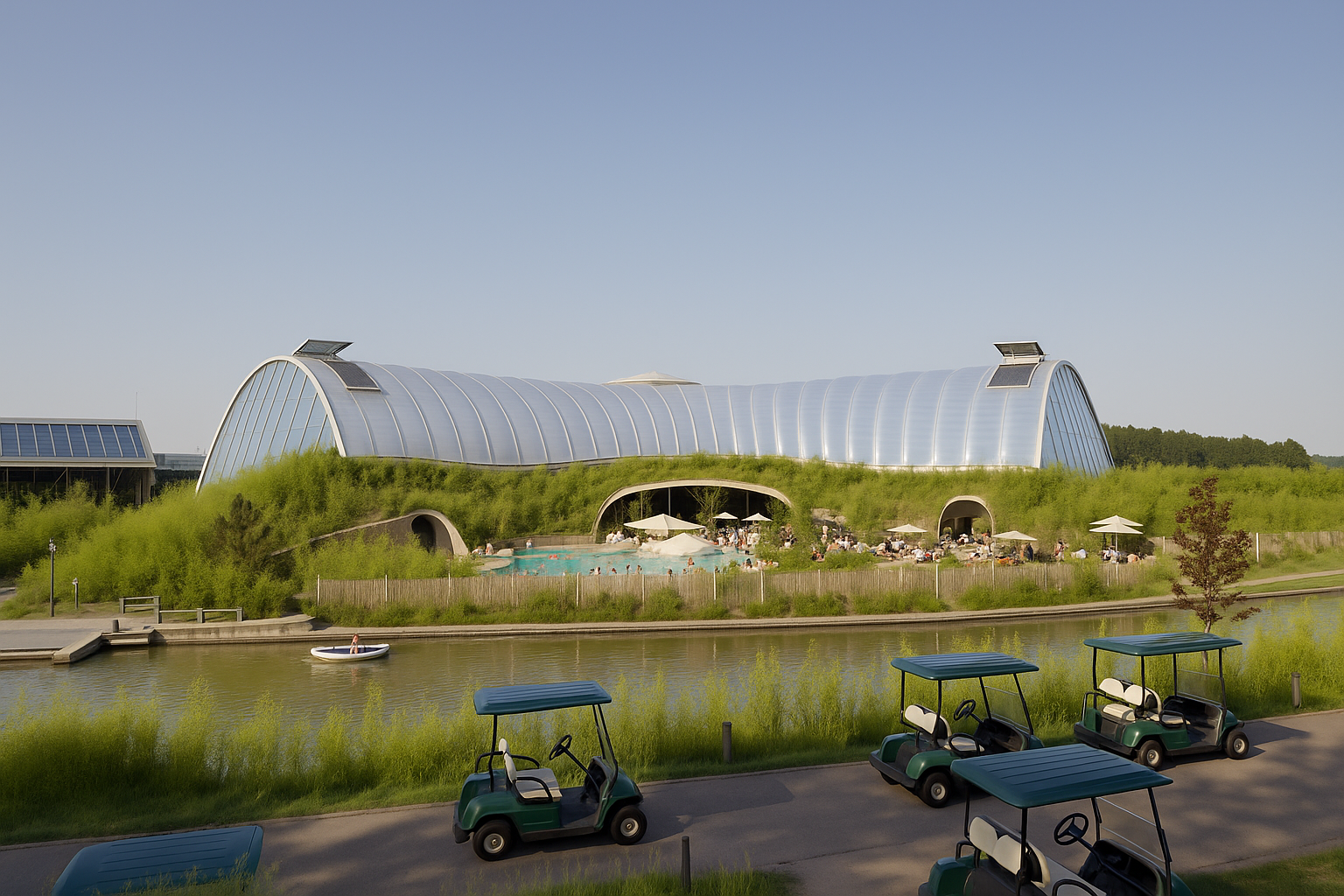
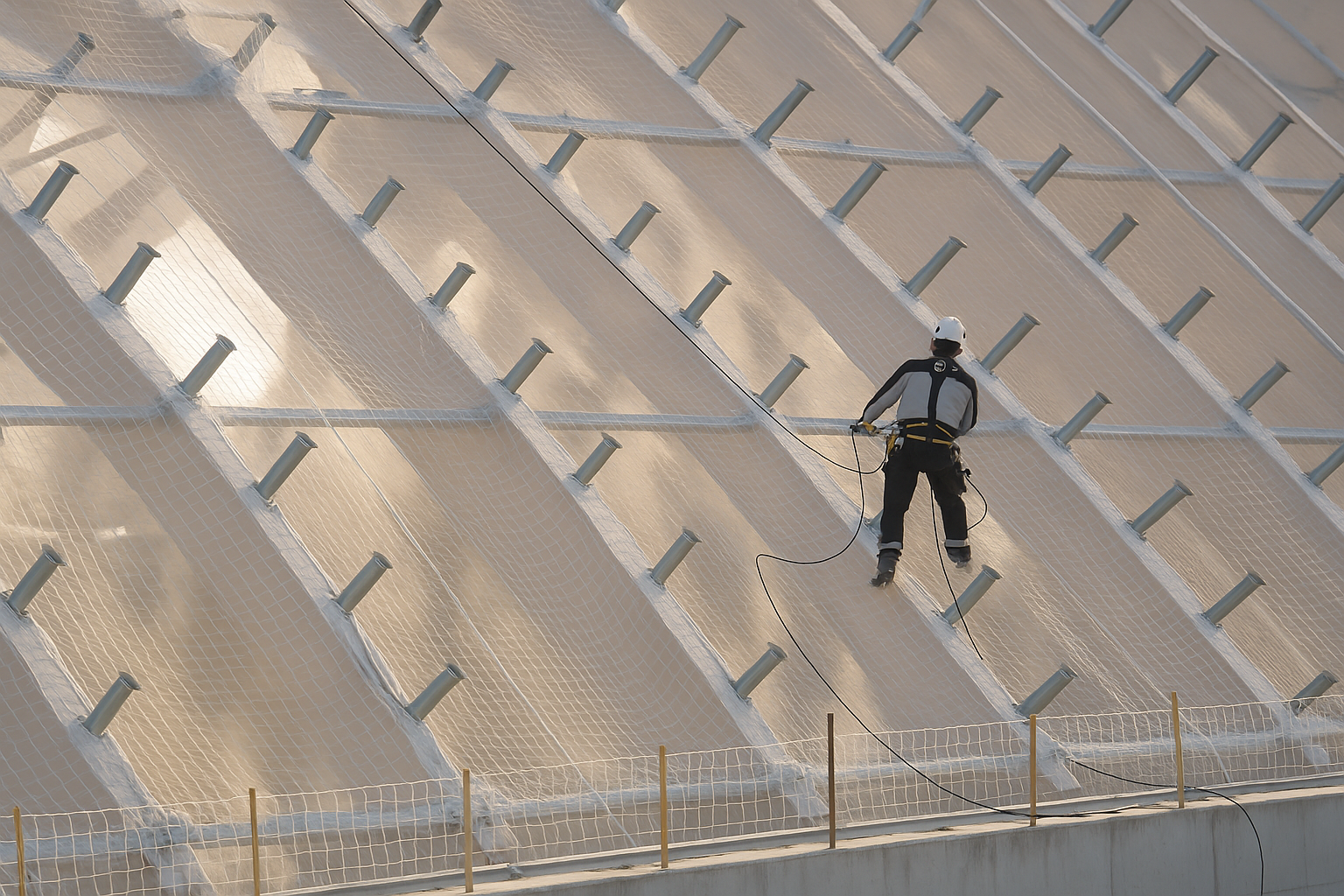
The London-Moselle Center Parcs Lightspan system demonstrates how an ETFE section combines transparency, structural efficiency, and visitor comfort. The roof consists of multiple ETFE foil layers fixed within lightweight aluminium frames and maintained by low-pressure air. This creates insulated cushions that allow abundant daylight while reducing the amount of structural steel required.
For more information about ETFE material properties, see the <a href=”/etfe-material/”>ETFE Material Guide</a> and our <a href=”/lightspan-systems/”>Lightspan Systems</a> overview.
ETFE Cushion System
Each ETFE section illustrates several foil layers forming pneumatic cushions. These cushions improve thermal performance, reduce weight, and provide excellent resistance to UV radiation, weather exposure, and ageing.
Lightweight Membrane Construction
Compared with conventional glass roofs, ETFE membranes require significantly less supporting structure while allowing large column-free spans and greater architectural flexibility.
ETFE Section: Why Is It Used in Modern Architecture?
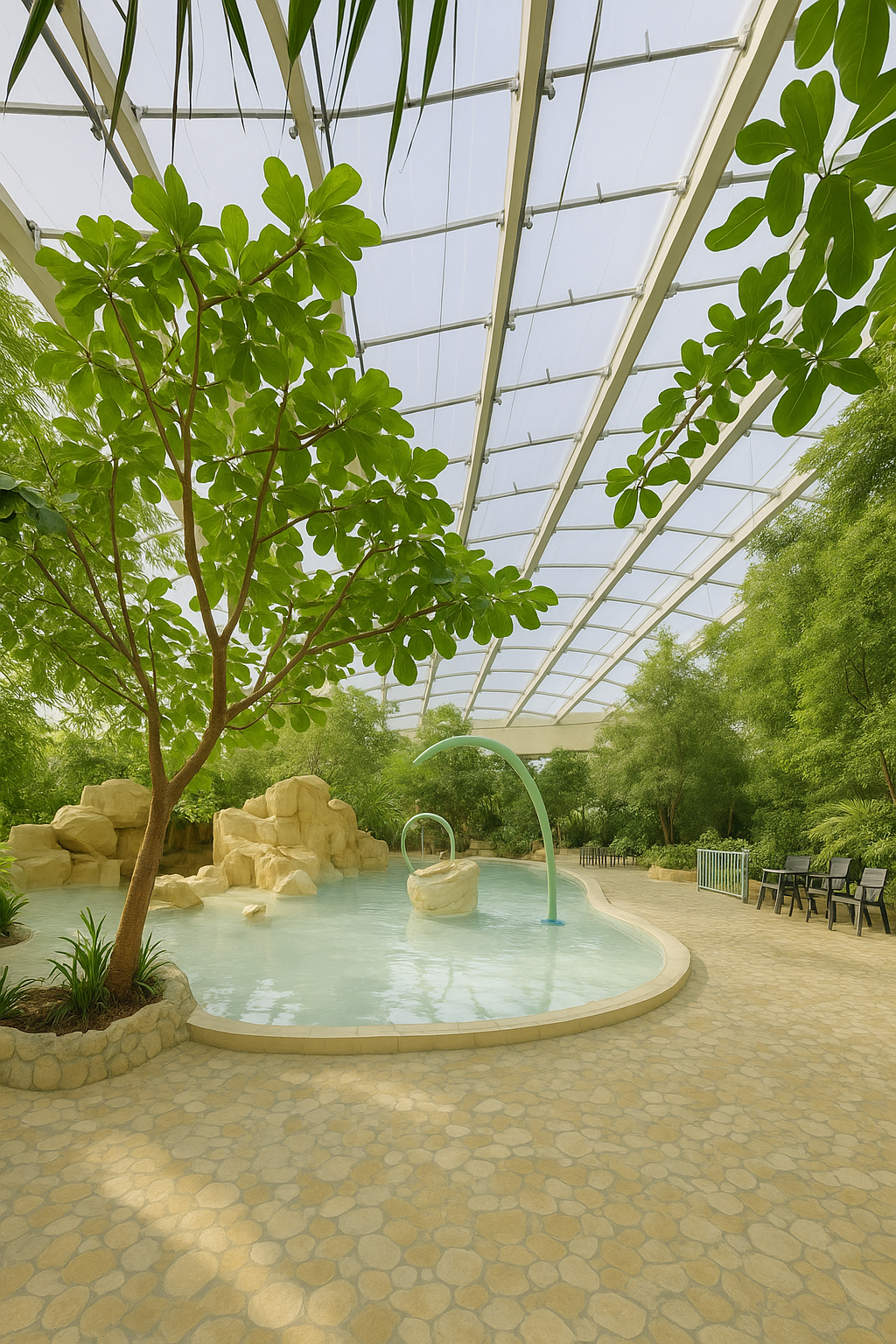
The London-Moselle Center Parcs project demonstrates how an ETFE section supports open, naturally lit leisure spaces. Visitors benefit from clear views, weather protection, and comfortable indoor conditions throughout the year.
Transparent Roof Systems
The transparent ETFE canopy creates a visual connection between interior spaces and the surrounding landscape while maximising natural daylight.
Energy Efficiency
ETFE cushions contribute to reduced heating and cooling demand through improved insulation and controlled solar performance.
ETFE Section: What Are the Sustainability Benefits?
A properly designed ETFE section supports lower embodied carbon due to its lightweight construction. ETFE foil is recyclable, durable, and requires little maintenance because of its self-cleaning surface.
Long-Term Durability
Many ETFE installations remain in service for decades with minimal maintenance, making them suitable for sports venues, botanical gardens, transport hubs, and leisure destinations.
ETFE Section: Which Projects Use ETFE Systems?
Projects like London-Moselle Center Parcs show how ETFE technology balances engineering, daylight, and environmental performance. Similar systems are widely used for stadium roofs, atriums, airports, and public buildings where large transparent spans are required.
Does an ETFE section improve building performance?
Yes. An ETFE section demonstrates how lightweight cushions improve daylight, reduce structural loads, support energy efficiency, and create comfortable indoor environments.
Further technical guidance is available from the <a href=”https://www.vector-foiltec.com/” target=”_blank” rel=”noopener”>Vector Foiltec</a>, the <a href=”https://www.etfe.com/” target=”_blank” rel=”noopener”>ETFE Industry Association</a>, and the <a href=”https://www.istructe.org/” target=”_blank” rel=”noopener”>Institution of Structural Engineers</a>.