

ETFE Roof System at Dubai’s Service Station of the Future
An ETFE roof system is a lightweight roofing solution made from ETFE foil cushions supported by a structural framework. It allows natural daylight transmission, reduces structural weight, and can integrate advanced lighting systems. The Service Station of the Future at Expo 2020 Dubai demonstrates how an ETFE roof system can be combined with carbon fibre construction to create a durable and resource-efficient architectural structure.
The project was developed by Enoc Group, the official Integrated Energy Partner of Expo 2020 Dubai, and opened in 2021 as a model for future mobility infrastructure.
How does the ETFE roof system work in this project?
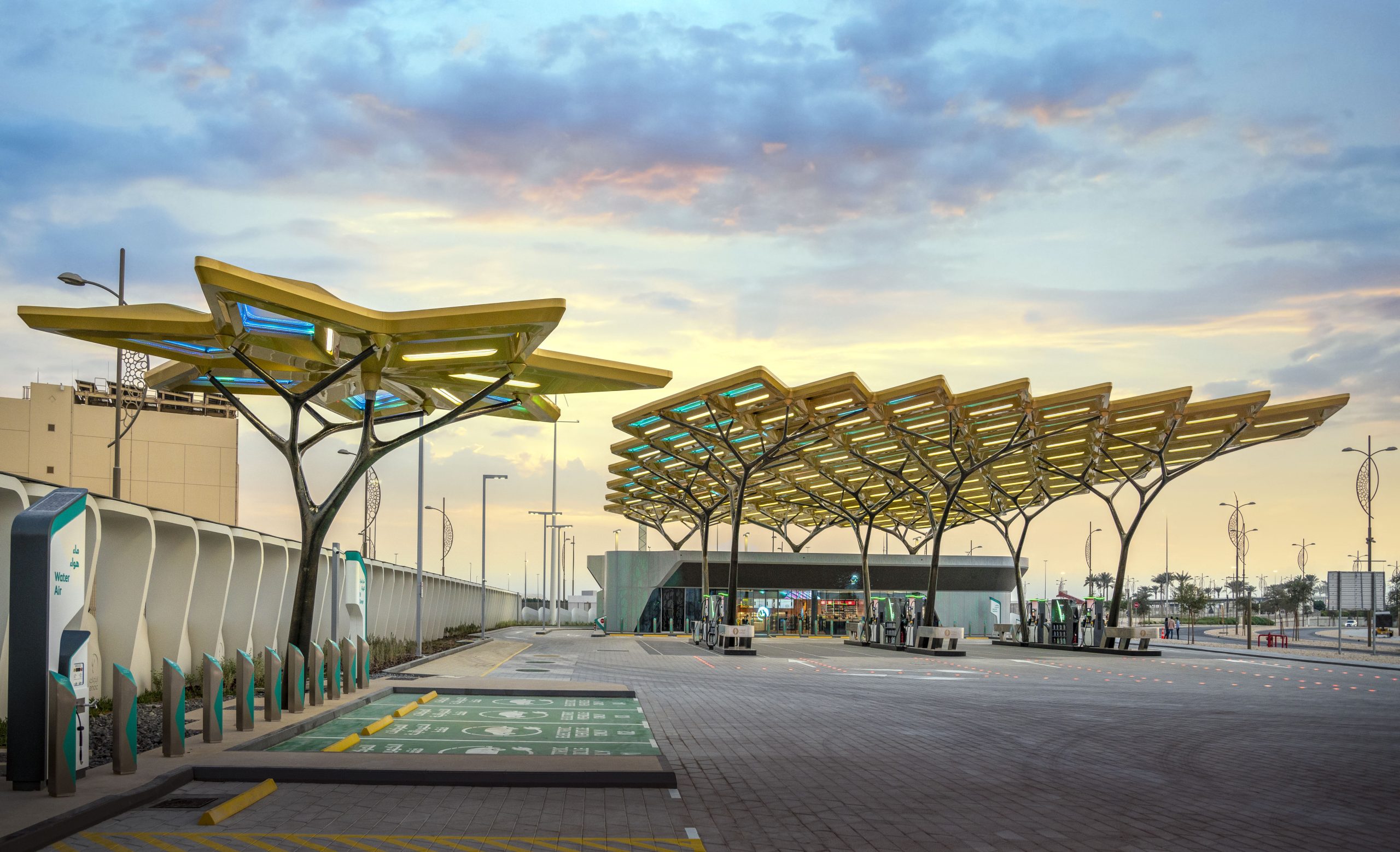
The station features the world’s first combination of carbon fibre structural elements and Texlon® ETFE cushions. The lightweight canopy spans large areas while requiring significantly less material than conventional roof systems.
Engineers and designers worked closely to ensure the structure could withstand Dubai’s extreme temperatures, solar exposure, and wind conditions. The result is a roof that delivers transparency, reduced material consumption, and long-term performance.
ETFE cushions and transparent roofing technology
The roof consists of 140 two-layer ETFE cushions. These pneumatic cushions create insulated air pockets while maintaining a lightweight structure. Compared with traditional glass roofs, ETFE roofing systems require less supporting steel and allow greater design flexibility.
Lightweight membrane structures and carbon fibre construction
The canopy is supported by carbon fibre elements rather than conventional steel components. This combination reduces overall structural weight while maintaining strength and stability across the large roof span.
Why is the ETFE roof system illuminated?
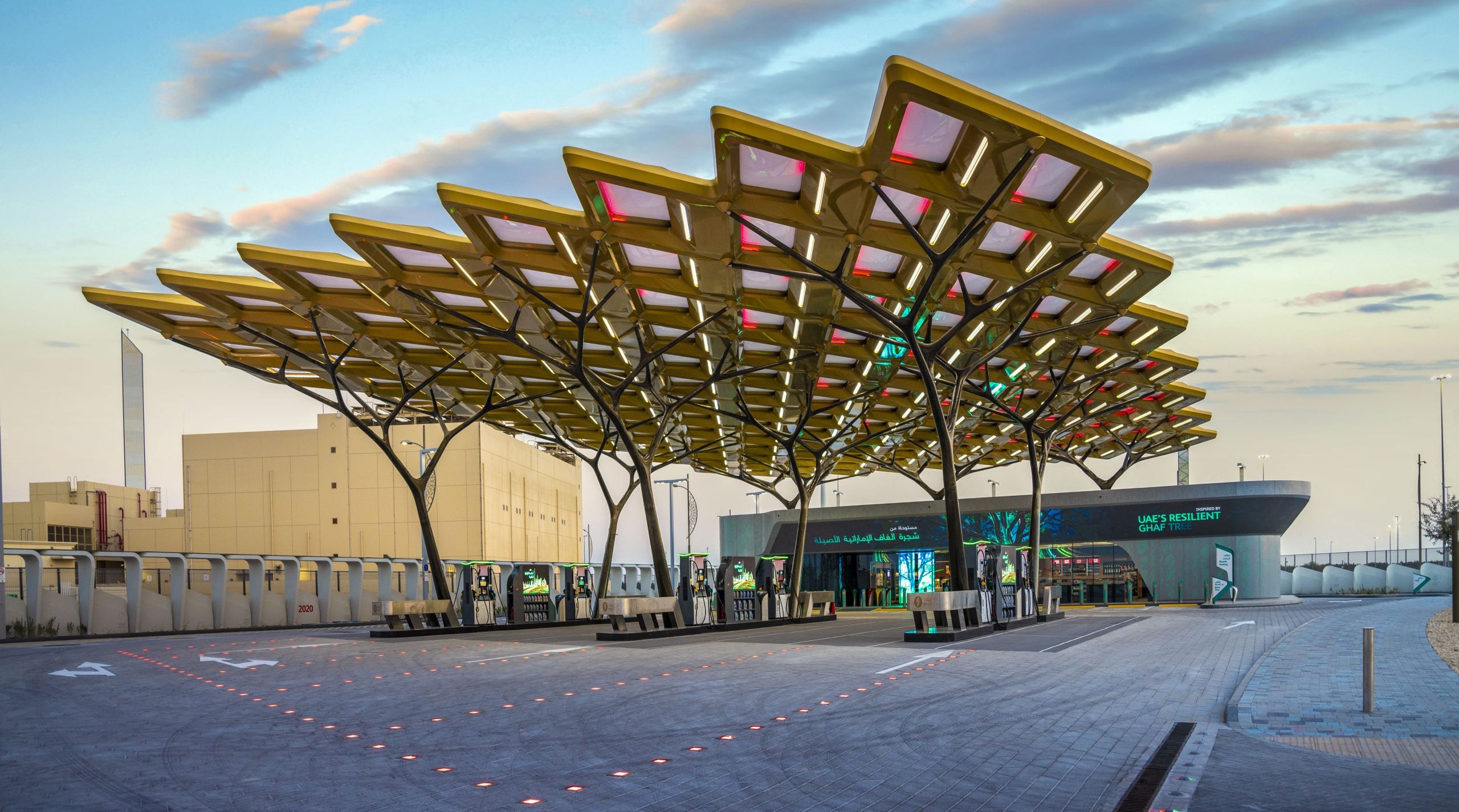
More than 3,800 LED modules are integrated into the canopy structure. During the day, the ETFE foil allows natural light to enter the space. At night, the white-pigmented ETFE surface enhances LED illumination and transforms the canopy into a visible architectural landmark.
Architectural lighting with ETFE foil
ETFE can function as both a building envelope and a lighting medium. Its translucency enables dynamic colour effects without adding significant structural loads.
Smart facade and roof illumination systems
The lighting concept demonstrates how ETFE roofing can contribute to placemaking, visitor experience, and visual identity while maintaining low material usage.
What makes this ETFE roof system unique?
The design was inspired by the exoskeleton of the Ghaf tree, the national tree of the United Arab Emirates. Eight carbon fibre trunks support the main canopy, while a ninth supports the adjacent electric vehicle charging station.
Biomimicry in tensile architecture
The organic geometry shows how membrane architecture can replicate natural forms while remaining structurally efficient.
Large-span ETFE canopy design
The project uses approximately 22,500 m² of carbon fibre components to create large, unobstructed covered spaces.
How does the ETFE roof system support sustainability goals?
The Service Station of the Future became the world’s first LEED Platinum-certified service station. Several design decisions contributed to this achievement, including the use of ETFE technology.
ETFE recycling and environmental performance
ETFE foil requires relatively low manufacturing energy and can be recycled at the end of its service life. Texlon® ETFE systems also provide Environmental Product Declaration (EPD) data to support sustainability assessments during project planning.
What sustainability benefits does an ETFE roof system provide?
An ETFE roof system can reduce structural material requirements, improve daylight use, support energy-efficient lighting strategies, and contribute to green building certification programs.
How long does an ETFE roof system last?
Most ETFE roof systems are designed for service lives exceeding 25–35 years, depending on project specifications, climate conditions, and maintenance requirements.
For more information about ETFE applications, visit our pages on ETFE facades, architectural canopies, and lightweight roofing systems.
Additional technical guidance can be found through the ETFE Association (https://etfe-association.org) and the U.S. Green Building Council (https://www.usgbc.org).