

ETFE Cushion Facade at Baku Olympic Stadium
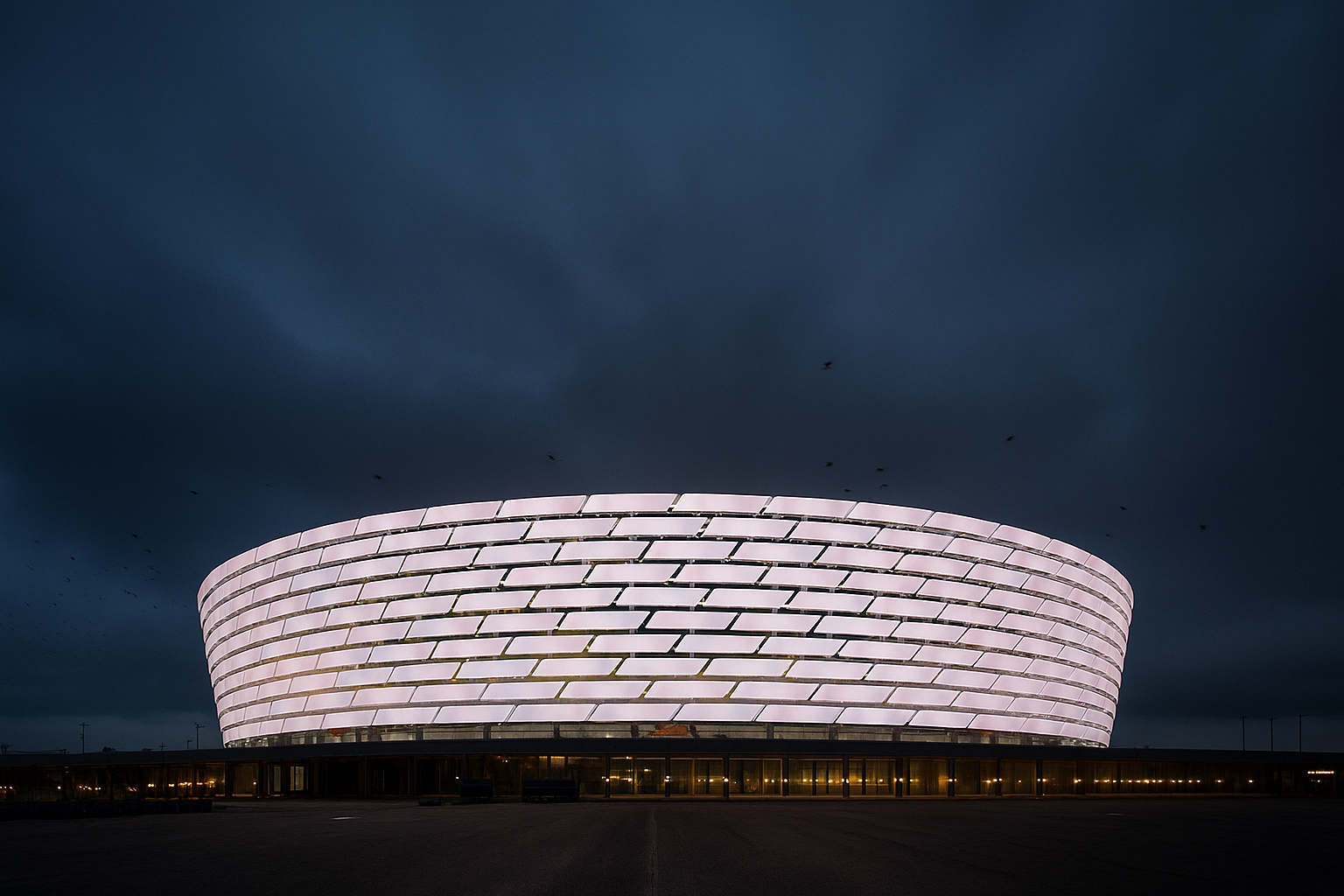
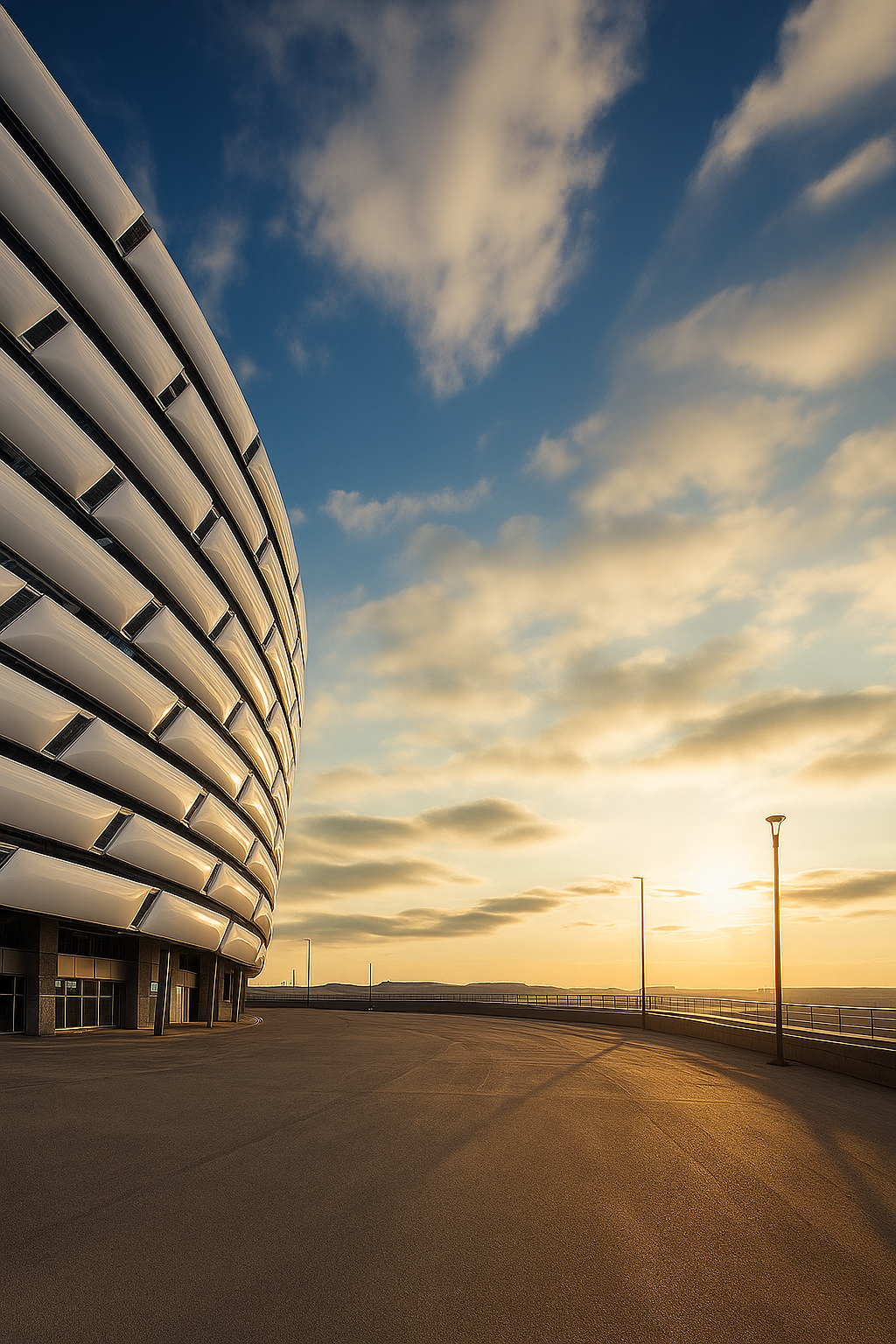
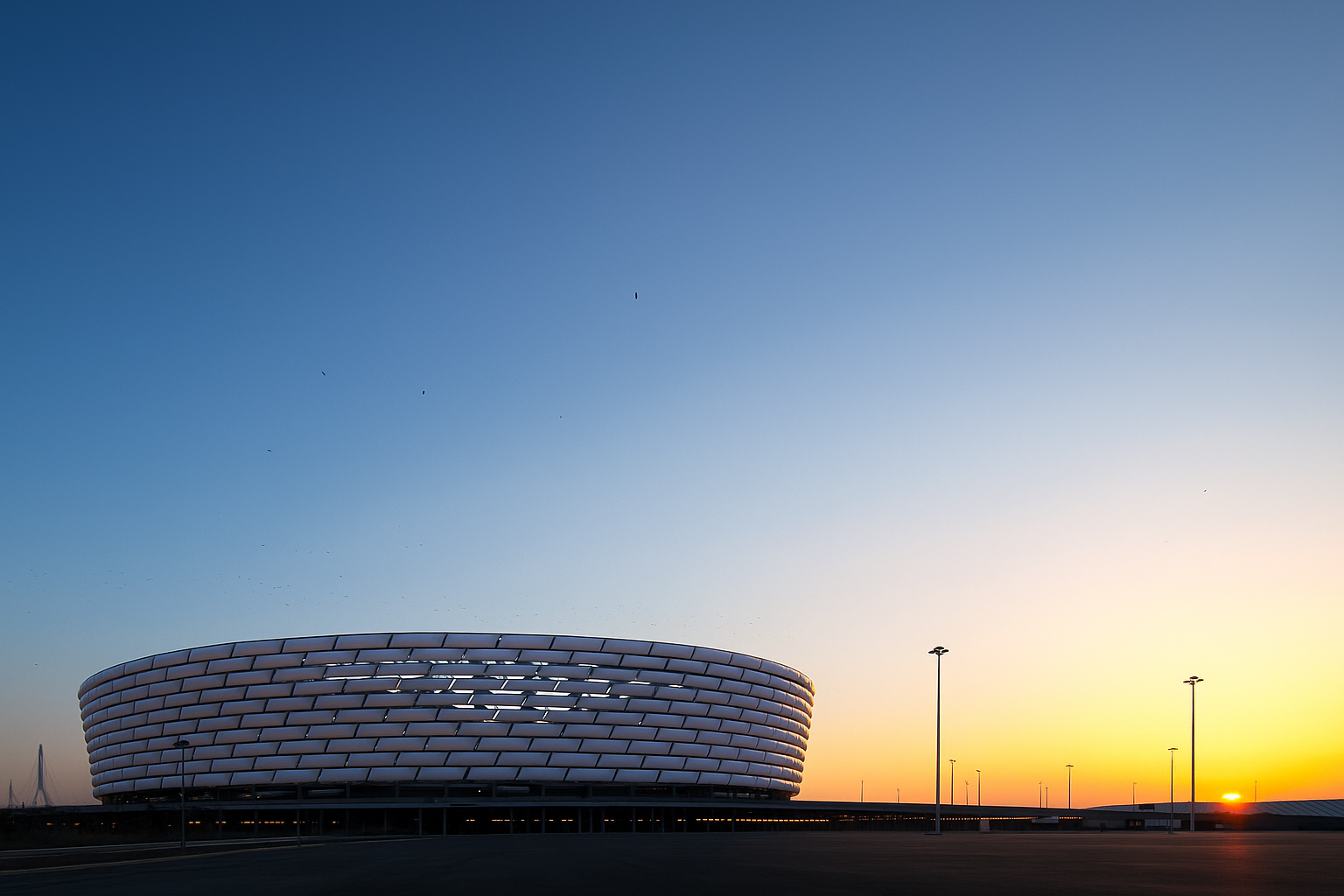
The etfe cushion facade and the etfe cushion facade for Baku Omlympic stadium are central elements of the stadium’s roof and envelope system. They describe a pneumatic ETFE foil structure used to control light, heat, and weight in large-span sports architecture. This solution defines the Baku Olympic Stadium architecture, where transparency, climate control, and structural efficiency are combined in one integrated system.
ETFE cushion facade – What is an etfe cushion facade?
An etfe cushion facade is a multi-layered system made of ETFE (ethylene tetrafluoroethylene) foil cushions filled with air. It replaces heavy glass roofs and allows large spans with minimal structural load. In stadium design, it is used for roofing and facade areas that require daylight transmission and solar control.
ETFE roof cushions and pneumatic foil systems
Also known as ETFE roof cushions or pneumatic foil facades, these systems rely on controlled air pressure to maintain shape and stability.
Transparent facade systems for stadiums
ETFE allows high transparency while filtering sunlight, making it suitable for large sports venues.
What makes an etfe cushion facade different?
Unlike glass, an etfe cushion facade weighs significantly less and adapts better to dynamic structural loads.
ETFE cushion facade for Baku Omlympic stadium – how does it work?
The etfe cushion facade for Baku Omlympic stadium is integrated into the roof structure to balance daylight intake and heat protection. The multi-layer Texlon® ETFE cushions reduce solar gain while keeping the interior bright and usable for events.
Solar control ETFE membrane systems
Printed and reflective foil layers help regulate temperature inside the stadium.
Lightweight stadium roof architecture
The reduced weight allows longer spans without heavy steel support structures.
Why was ETFE chosen for Baku stadium?
Because it performs well in hot climates and supports large-scale roof geometries.
ETFE cushion facade in stadium architecture projects
In global stadium design, the etfe cushion facade is widely used for arenas requiring large covered seating areas without losing natural light. It supports flexible architectural forms and reduces structural load.
Large-span roofing systems with ETFE
These systems enable complex geometries in sports architecture.
Energy and daylight management facades
ETFE improves daylight distribution while controlling heat exposure.
ETFE cushion facade and Baku Olympic Stadium architecture
The etfe cushion facade for Baku Omlympic stadium is part of a broader engineering approach that defines the stadium’s architectural identity. The Baku Olympic Stadium architecture demonstrates how lightweight facade systems can shape large public venues.
Collaboration in stadium engineering projects
Architects, engineers, and installers coordinate closely to implement ETFE systems.
Structural efficiency in large stadium roofs
ETFE reduces the need for heavy roof framing elements.
ETFE cushion facade – future use in sports venues
The etfe cushion facade continues to influence stadium design worldwide, especially where daylight, weight reduction, and climate control are critical.
What is an etfe cushion facade?
An ETFE cushion facade is a system of air-filled ETFE foil layers used as a lightweight alternative to glass in roofs and building envelopes.
Why is ETFE used in stadiums?
It reduces structural weight, allows daylight transmission, and improves solar control in large venues.
How does the etfe cushion facade for Baku Omlympic stadium work?
It uses multi-layer air cushions with printed foil to regulate heat and light inside the stadium.
Is ETFE durable in extreme climates?
Yes, ETFE performs well under high UV exposure and temperature variations.