
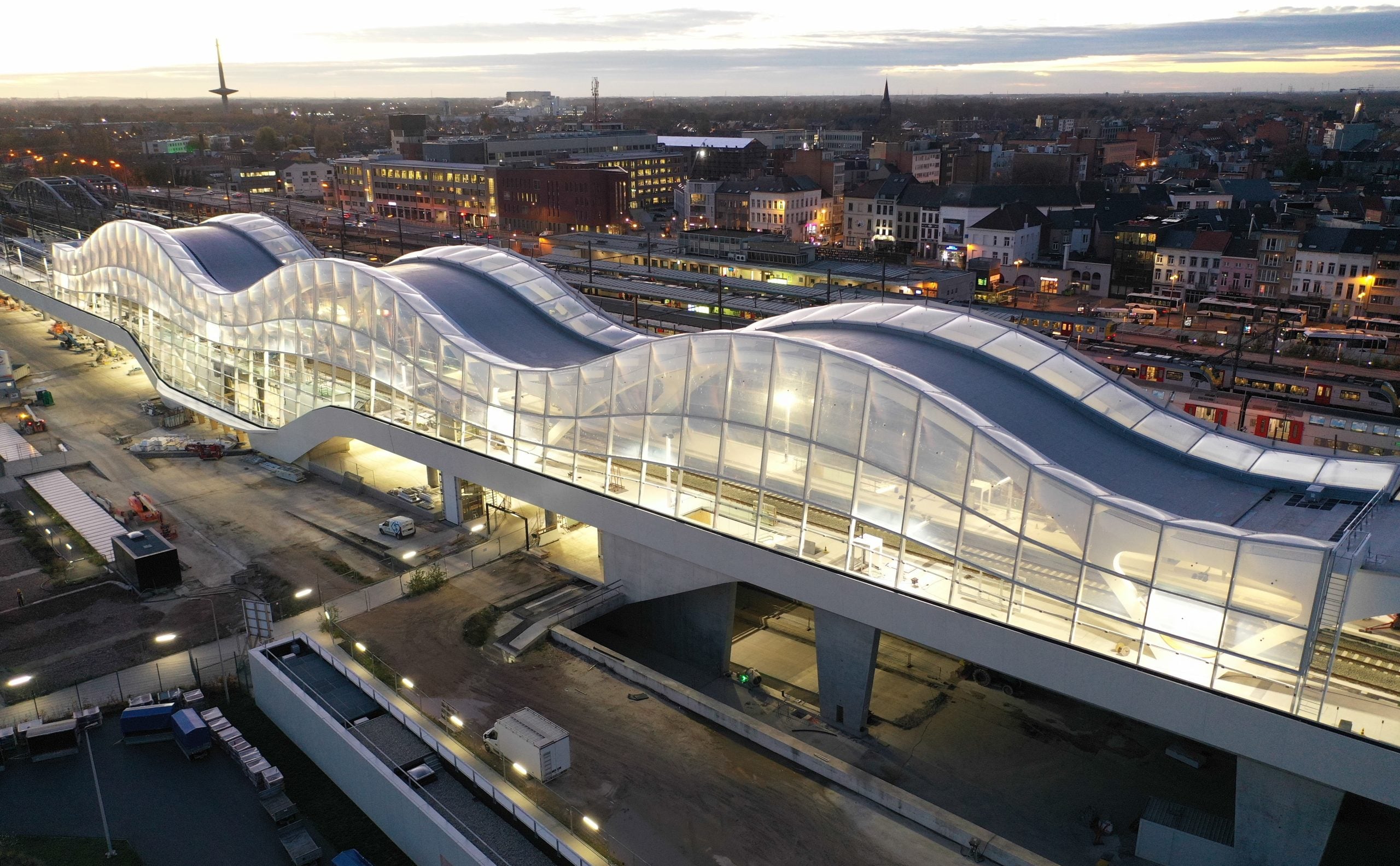


ETFE Cushion Roof at Mechelen Train Station
ETFE Cushion Roof: What Is an ETFE Cushion Roof? An ETFE cushion roof is a lightweight roofing system made of multiple layers of ETFE foil that are continuously supported by low-pressure air. The cushions create large transparent roof surfaces, allow natural daylight into buildings, reduce structural weight, and can span wide distances with minimal supporting steel. The renovation of Mechelen Train Station in Belgium demonstrates how an ETFE roof combines architectural freedom with practical engineering.
Belgium has delivered several remarkable public infrastructure projects in recent years, and the transformation of Mechelen Train Station is among the most notable. Designed by Brent Turchak and Steven de Bolle for NMBS, the station was redeveloped to meet growing passenger demands while creating a distinctive landmark for the city.
ETFE Cushion Roof: Why Was It Selected for Mechelen Train Station?
Large transport hubs require roofs that provide weather protection without creating dark interior spaces. The ETFE roof installed at Mechelen achieves this by allowing generous amounts of daylight to enter the station while maintaining a lightweight structure.
The station features expansive transparent façades and a flowing roof geometry. A 4-metre structural grid supports custom-shaped Texlon® ETFE cushions, whose curved forms follow the sweeping architectural lines of the building. The result is a bright concourse where passengers remain protected from wind and rain while benefiting from natural light throughout the day.
Transparent Roofing Systems for Large Public Buildings
Unlike conventional glass roofs, ETFE cushion systems weigh only a fraction as much while covering comparable spans. Their flexibility allows architects to create curved roofs that would be difficult or costly with rigid glazing.
Air-Inflated ETFE Cushions
Each ETFE cushion consists of several foil layers kept in shape by a controlled air pressure system. This construction provides stability, excellent light transmission, and reliable long-term performance with relatively low maintenance requirements.
ETFE Cushion Roof Engineering: How Are Structural Challenges Solved?
Public transport projects involve demanding structural, safety, and regulatory requirements. Throughout the Mechelen project, engineers collaborated closely with architects, contractors, and railway authorities to ensure that every component complied with project specifications.
Engineering considerations included:
- Material certification
- Structural calculations
- Wind suction and pressure analysis
- Installation methodology
- Safe maintenance access
- Railway safety requirements
Wind Load Analysis for ETFE Roof Structures
Wide-span ETFE roofs are particularly sensitive to wind loads. Advanced structural modelling and load distribution calculations were used to verify cushion behaviour under varying pressure conditions.
Custom Valve Technology
Specially engineered valve systems regulate the internal cushion pressure, allowing the roof to maintain its geometry while responding safely to changing environmental conditions.
ETFE Cushion Roof Benefits: What Makes This Roofing System Different?
Compared with traditional roofing materials, an ETFE cushion roof offers several practical advantages:
- High daylight transmission
- Low structural weight
- Large clear spans
- Curved architectural forms
- Reduced supporting steel
- Weather resistance
- Long service life
- Efficient maintenance
These characteristics make ETFE roofs suitable for railway stations, stadiums, airports, botanical gardens, shopping centres, and other large public buildings.
ETFE Membrane Roof vs Glass Roof
Although both materials create transparent roofs, ETFE cushions are significantly lighter than glass. This often reduces the amount of structural steel required while giving architects greater design flexibility for free-form buildings.
ETFE Cushion Roof: A Benchmark for Future Infrastructure Projects
The Mechelen Train Station renovation illustrates how an ETFE roof can support ambitious architectural design while meeting the technical requirements of modern public infrastructure. By combining lightweight construction, daylight utilisation, and advanced structural engineering, the project has become an example for transport facilities around the world.
For more information about ETFE roofing technology and engineering solutions, explore our ETFE Roofing Systems, Engineering Services, and Public Infrastructure Projects pages.