
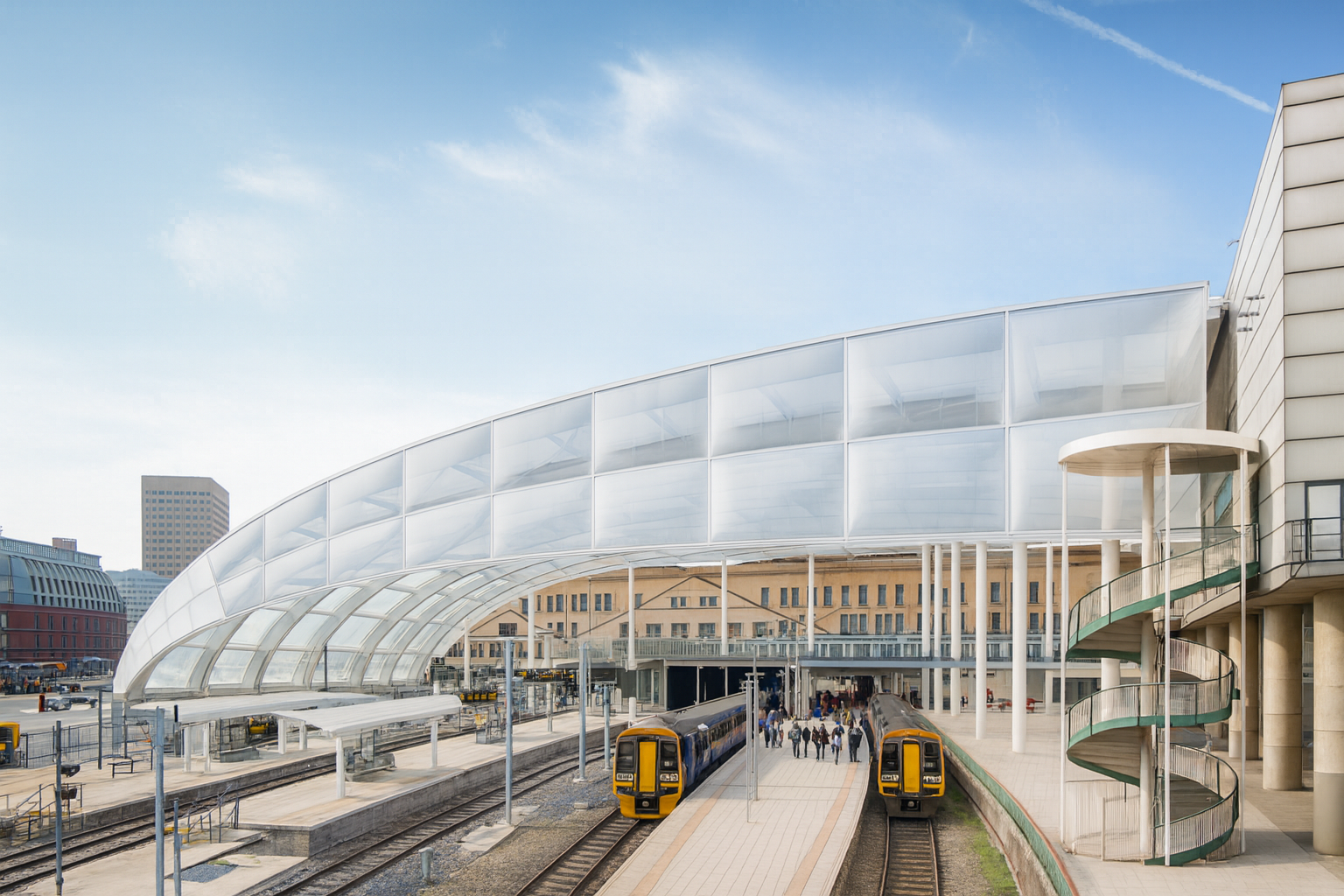


ETFE Foil at Manchester Victoria Station
What is ETFE foil? ETFE foil is a lightweight, transparent fluoropolymer membrane widely used in architectural roofing and façade systems. Compared with conventional glass, ETFE foil offers high light transmission, reduced structural weight, and excellent weather resistance. At Manchester Victoria Station, ETFE foil helped preserve the character of a historic railway landmark while supporting the demands of a modern transport hub.
ETFE Foil: What Is ETFE Foil and Why Was It Chosen?
Manchester Victoria Station combines Victorian architecture with contemporary engineering. During the station’s redevelopment, maintaining its historic appearance while improving passenger comfort was a key objective.
Lightspan supplied the ETFE foil roofing system, enabling large clear-span roof sections without the weight associated with traditional glazing. The material’s flexibility allowed the roof design to integrate with the station’s existing structure while providing an open, bright concourse.
For more information about similar projects, visit our ETFE Projects and Architectural Roofing Systems pages.
ETFE Membrane Technology
ETFE (ethylene tetrafluoroethylene) is a fluoropolymer film developed for demanding environments. It is resistant to UV radiation, corrosion, pollution and temperature fluctuations, making it suitable for long-term outdoor applications.
Lightweight Roofing Material
Because ETFE foil weighs only a fraction of conventional glass, supporting steel structures can often be lighter. This helps architects create wide, unobstructed spaces while reducing structural loads.
Transparent Roof Systems
ETFE cushions transmit a high percentage of natural daylight, creating bright interiors that reduce dependence on artificial lighting during daytime operation.
How Does ETFE Foil Improve Passenger Comfort?
The ETFE roof at Manchester Victoria Station allows daylight to reach the concourse while helping regulate solar heat gain through multi-layer cushion technology.
Passengers benefit from a brighter environment, improved visibility and a more comfortable waiting area throughout the year.
Energy-Efficient Building Envelope
The insulated air cushions contribute to thermal performance while maintaining a lightweight roof construction.
Natural Daylighting
Natural daylight enhances the station environment and supports lower electricity consumption for lighting during daylight hours.
Why Is ETFE Foil Used Instead of Glass?
Many architects specify ETFE foil where weight, flexibility and large-span coverage are priorities.
Compared with glass, ETFE foil offers:
- Lower structural weight
- High light transmission
- Excellent weather resistance
- Long service life
- Low maintenance requirements
- Flexible design possibilities for complex roof geometries
These characteristics make ETFE foil suitable for railway stations, airports, sports venues, botanical gardens and commercial buildings.
How Does ETFE Foil Support Historic Buildings?
Manchester Victoria Station demonstrates that contemporary materials can complement heritage architecture without altering its identity.
Lightspan’s ETFE roofing system preserved the visual character of the station while providing a practical solution for today’s operational requirements.
Fluoropolymer Roofing Solutions
Modern fluoropolymer membranes continue to expand architectural possibilities by combining durability with lightweight construction.
ETFE Cushion Systems
Multi-layer ETFE cushion systems provide insulation, daylight transmission and structural efficiency in a single roofing solution.
Is ETFE Foil Durable?
Yes. ETFE foil is designed for decades of outdoor exposure and maintains its performance under UV radiation, rain, snow and varying temperatures.
Does ETFE Foil Require Much Maintenance?
No. The smooth surface naturally sheds dirt through rainfall, reducing routine cleaning requirements compared with many traditional roofing materials.