
Your trusted partner for service and project success.
ETFE Panel: What Is an ETFE Panel?
An ETFE panel is a lightweight building element made from ETFE foil (ethylene tetrafluoroethylene) and used primarily for transparent roofs, façades, skylights and other building-envelope applications. Unlike conventional glass panels, an ETFE panel uses a very thin fluoropolymer film to create lightweight, translucent or transparent surfaces. Depending on the project, ETFE panels can be designed as single-layer elements or combined into multi-layer pneumatic cushions.
ETFE Panel: What Is It Used For?
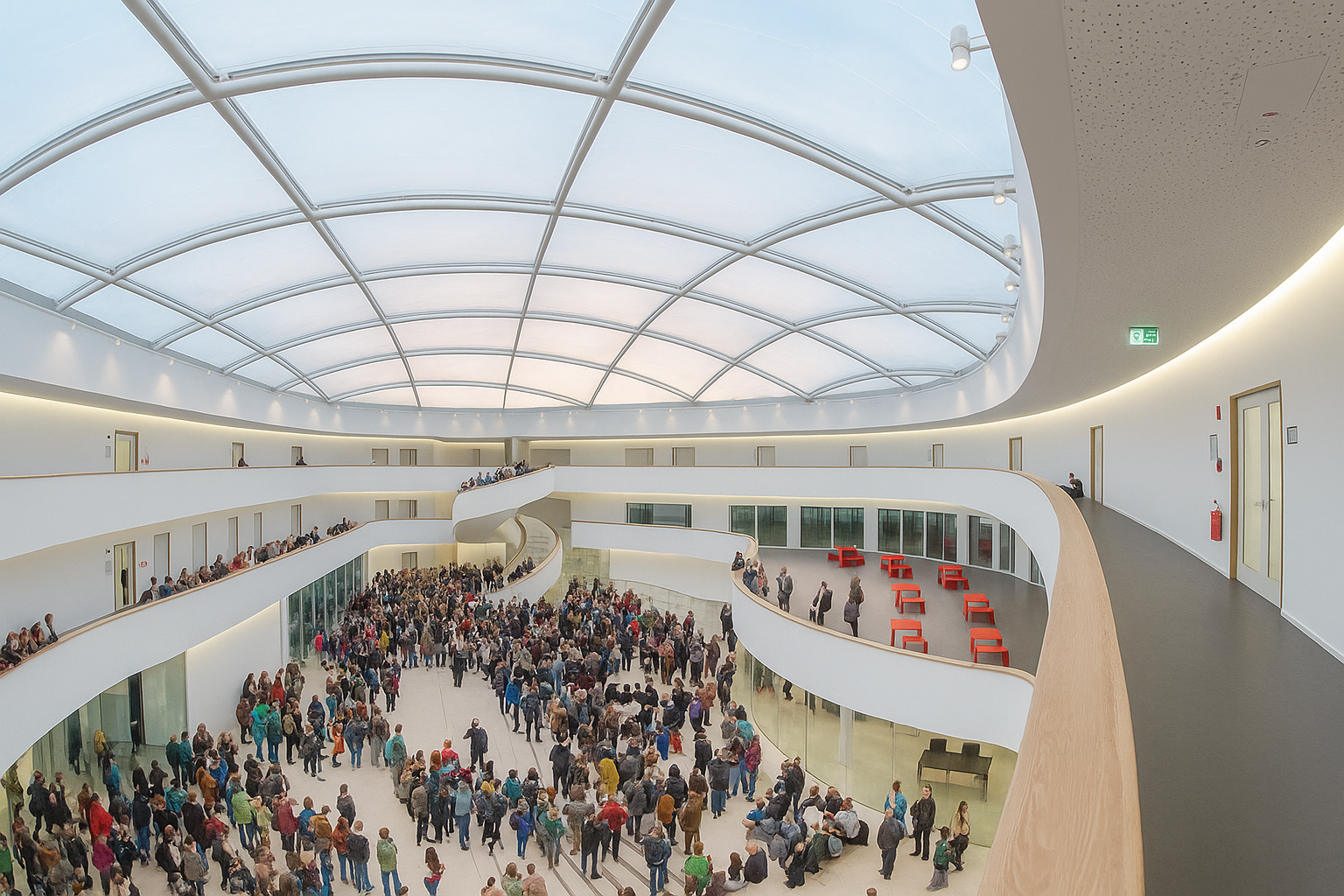
An ETFE panel is used where architects and engineers need a lightweight enclosure with high light transmission and resistance to outdoor conditions. ETFE systems are common in stadiums, atriums, transport buildings, botanical gardens and large-span roofs. The material is also suitable for complex geometries because the foil can be fabricated into large individual panels and cushions. Lightspan’s ETFE systems cover applications including ETFE roofs, façades, skylights and cushion systems.
ETFE foil and membrane systems: How do they work?
In a typical cushion system, several layers of ETFE foil are welded around their perimeter and supported by a low-pressure air system. The resulting cushion provides shape, stability and thermal separation while keeping the overall building envelope lightweight. Depending on the required performance, ETFE cushions can contain different numbers of foil layers, coatings and patterns.
ETFE Panel: How strong is the material?
Although ETFE foil is very thin, it has useful mechanical, chemical and weathering properties. Manufacturer data describes ETFE film as having high impact and tear resistance, low friction and strong resistance to outdoor exposure. Its light weight is one of the main reasons ETFE is used for large architectural surfaces.
ETFE Panel: What Are the Main Advantages?
Transparent ETFE panels: How much light do they transmit?
One important characteristic of an ETFE panel is its ability to transmit natural daylight. ETFE can also be printed, coated or arranged in multiple layers to influence solar transmission and visual appearance. This makes it useful where daylight is an important part of the architectural concept.
Lightweight ETFE foil: Why is it used instead of glass?
ETFE weighs considerably less than conventional glazing, which can reduce loads on the supporting structure. This is particularly relevant for large-span roofs and façades where reducing dead load can influence the size and complexity of the primary structure.
ETFE Panel: Where Is It Used?
ETFE façade and roof systems: What projects use them?
ETFE panels are used for stadium roofs, atriums, public buildings, conservatories, transport hubs and other large architectural envelopes. The material has been used in projects such as the Eden Project and major stadiums around the world.
For more information, explore Lightspan’s ETFE projects or learn about ETFE roof systems and concept development.
ETFE Panel: What Should Be Considered?
ETFE building envelope: What affects the design?
The design of an ETFE panel depends on structural loads, panel geometry, foil layers, air pressure, thermal requirements, solar control and the supporting frame. For large projects, these factors need to be coordinated during engineering, fabrication and installation rather than considered separately.
ETFE Panel: Is it suitable for every building?
No. ETFE is particularly useful for lightweight, transparent or translucent building envelopes, but the appropriate system depends on the project’s structural, climatic, acoustic, fire and building-physics requirements.
ETFE panel systems: What is the difference between a panel and a cushion?
A single-layer ETFE panel is generally mechanically tensioned or fixed to a supporting structure. An ETFE cushion consists of multiple foil layers that are welded together and stabilised with low-pressure air. The right solution depends on the required span, geometry and building performance.
FAQ: ETFE Panel
What is an ETFE panel?
An ETFE panel is a building-envelope element made from ETFE fluoropolymer foil, used for lightweight transparent or translucent roofs, façades and other architectural structures.
Is ETFE better than glass?
ETFE is not automatically better than glass. Its main advantages are very low weight, high light transmission and the ability to create large lightweight surfaces. The appropriate material depends on the project’s requirements.
How is an ETFE panel supported?
ETFE panels can be mechanically fixed to aluminium or other supporting frames. Multi-layer cushions are typically stabilised using a low-pressure air system.
Where are ETFE panels used?
They are commonly used for roofs, façades, atriums, stadiums, conservatories, skylights and other large-span building envelopes.