


ETFE Facade at The Shed: Form and Function in One Structure
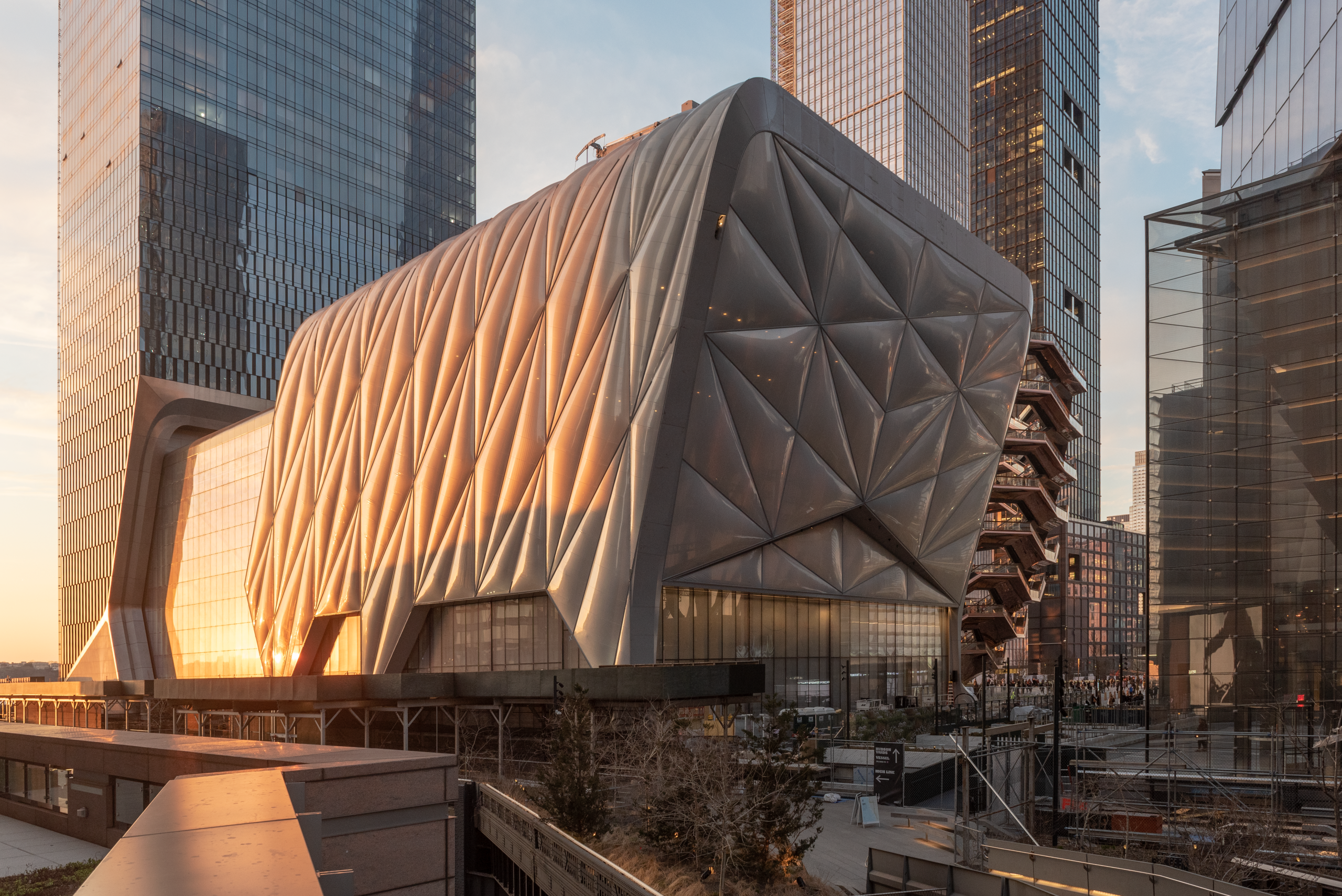
An ETFE facade is a lightweight building envelope made from ETFE (Ethylene Tetrafluoroethylene) foil cushions that provide weather protection, daylight transmission, and structural efficiency. The ETFE facade of The Shed in New York demonstrates how advanced facade engineering can support both architectural design and practical building performance.
Lightspan produced and installed 148 ETFE cushions for the movable shell. Of these, 146 are three-layer cushions and two are four-layer cushions. The continuous weld seams across the entire structure presented a significant engineering challenge and required extensive development to achieve the desired appearance and performance.
How Does the ETFE Facade at The Shed Handle Wind Loads?
The ETFE facade was designed to withstand demanding environmental conditions.
ETFE Cushion Technology and Structural Performance
Special load-sharing valves developed by Lightspan distribute pressure throughout the cushion system. This helps the ETFE facade resist high wind loads while maintaining its shape and stability.
Inflated Membrane Systems in Architectural Facades
The cushions are supplied with air through four inflation units located on the mechanical deck. Positioning the equipment out of sight preserves the clean appearance of the building while ensuring reliable operation.
Why Was This ETFE Facade Design Unique?
The project required a facade that delivered both technical performance and a distinctive visual identity.
Transparent Building Skins and Printed ETFE Foils
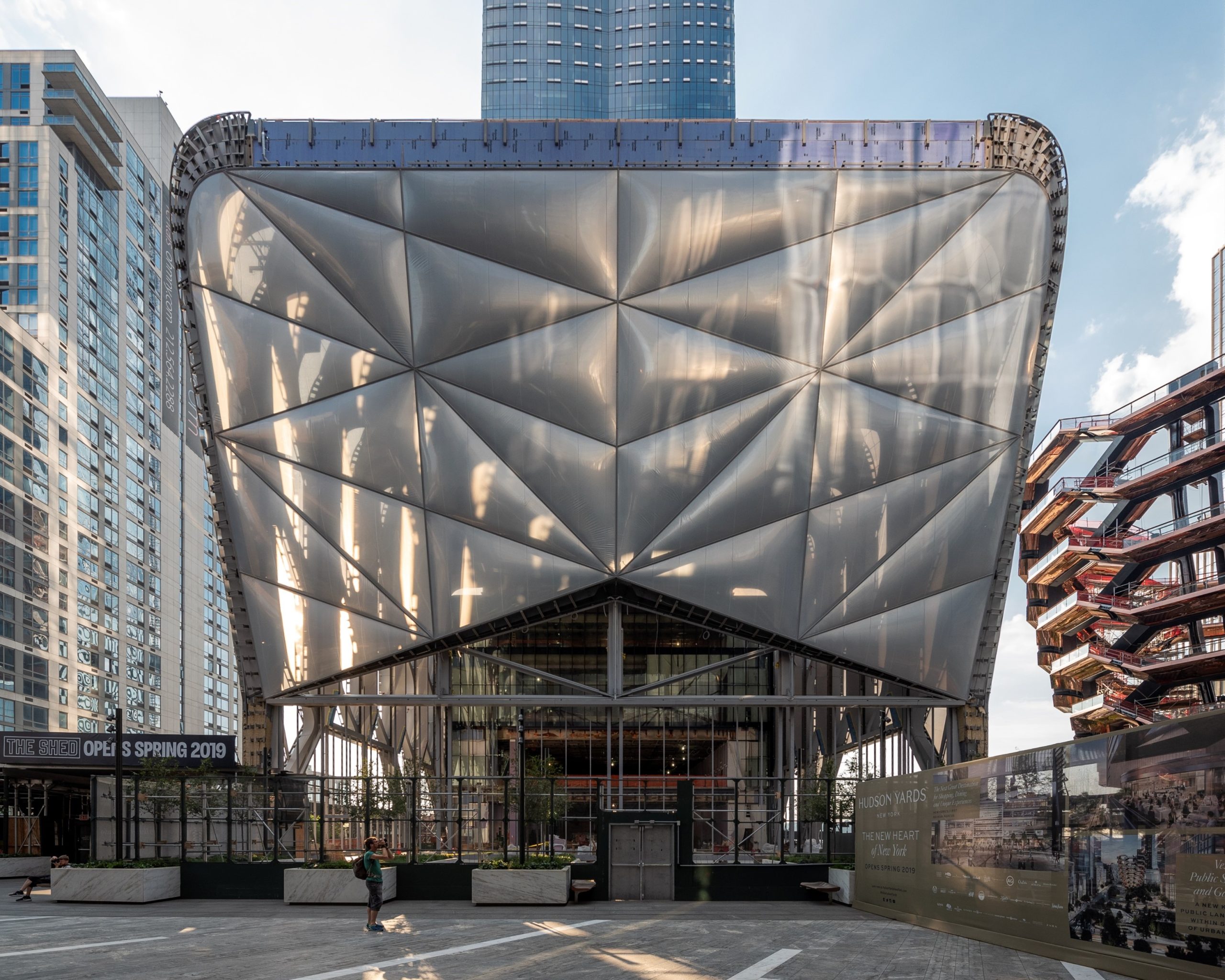
To create the shell’s silver appearance, the upper ETFE layer was printed, the middle layer used a white film with 29% opacity, and the lower layer remained transparent. This combination produced the desired visual effect while preserving daylight transmission.
Lightweight Facade Systems for Complex Shapes
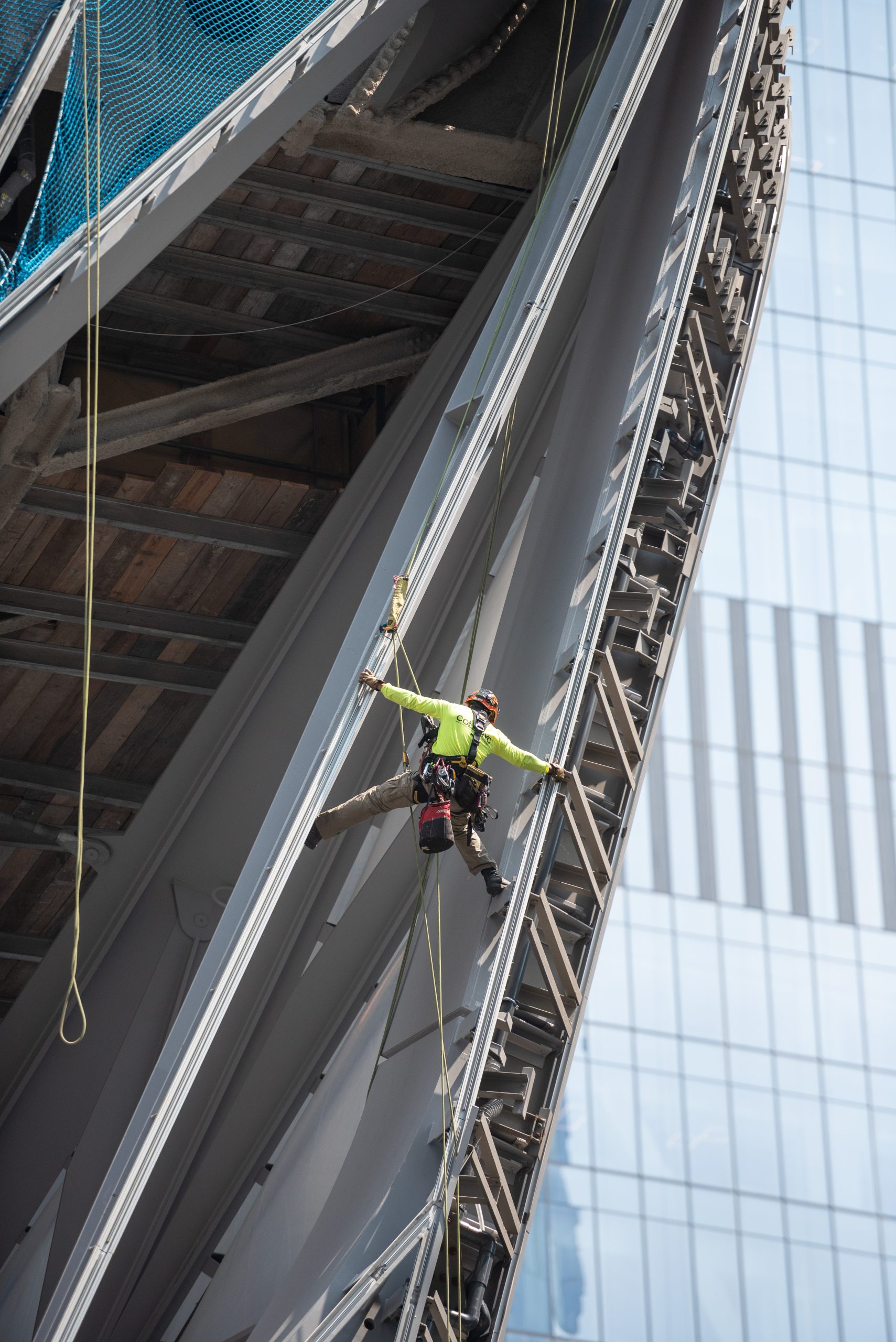
The 90-degree edges at the top of the shell were among the most challenging elements. Several prototype cushions and a full-scale mock-up were developed in Bremen before the final geometry was approved.
What Are the Benefits of an ETFE Facade for Cultural Buildings?
ETFE Cladding and Flexible Architecture
An ETFE facade allows large spans with minimal structural weight. This makes it suitable for venues that require adaptable spaces and movable building elements.
Energy-Efficient Building Envelopes
ETFE cushion systems provide good insulation relative to their weight and allow significant natural daylight, helping reduce dependence on artificial lighting.
How Does the ETFE Facade Support The Shed’s Cultural Mission?
The Shed, located in Hudson Yards, serves as a center for exhibitions, theater, dance, music, film, poetry, and visual arts. Its eight-story structure includes column-free galleries and a 500-seat theater.
What Makes This ETFE Facade Different from Conventional Facades?
A key feature is the 1,598 m² McCourt Plaza, covered by a movable Texlon® ETFE shell. The ETFE facade enables the space to adapt to different event formats while creating a recognizable architectural landmark.
The Shed demonstrates how an ETFE facade can combine structural efficiency, architectural freedom, and flexible use within a single building envelope.