
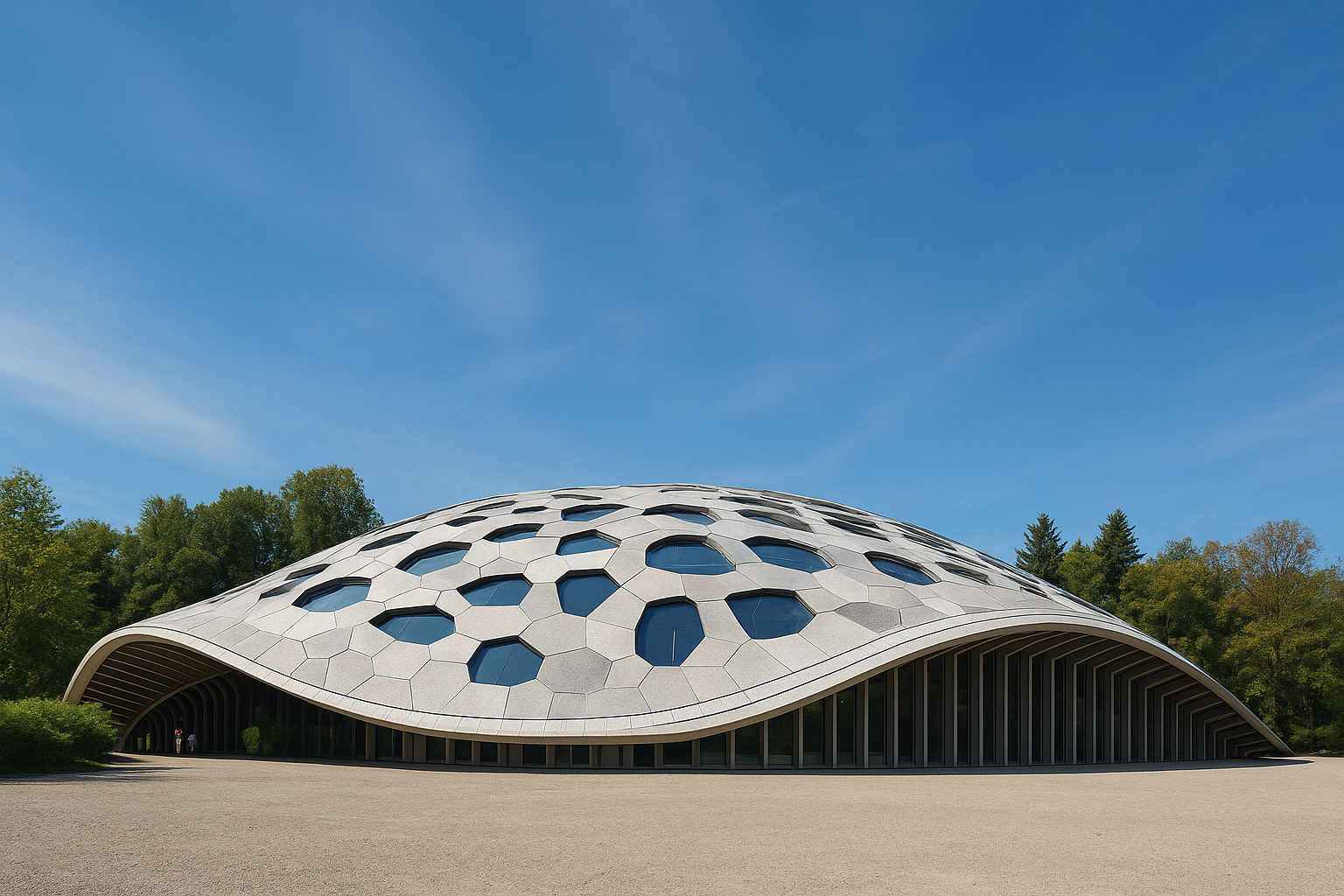
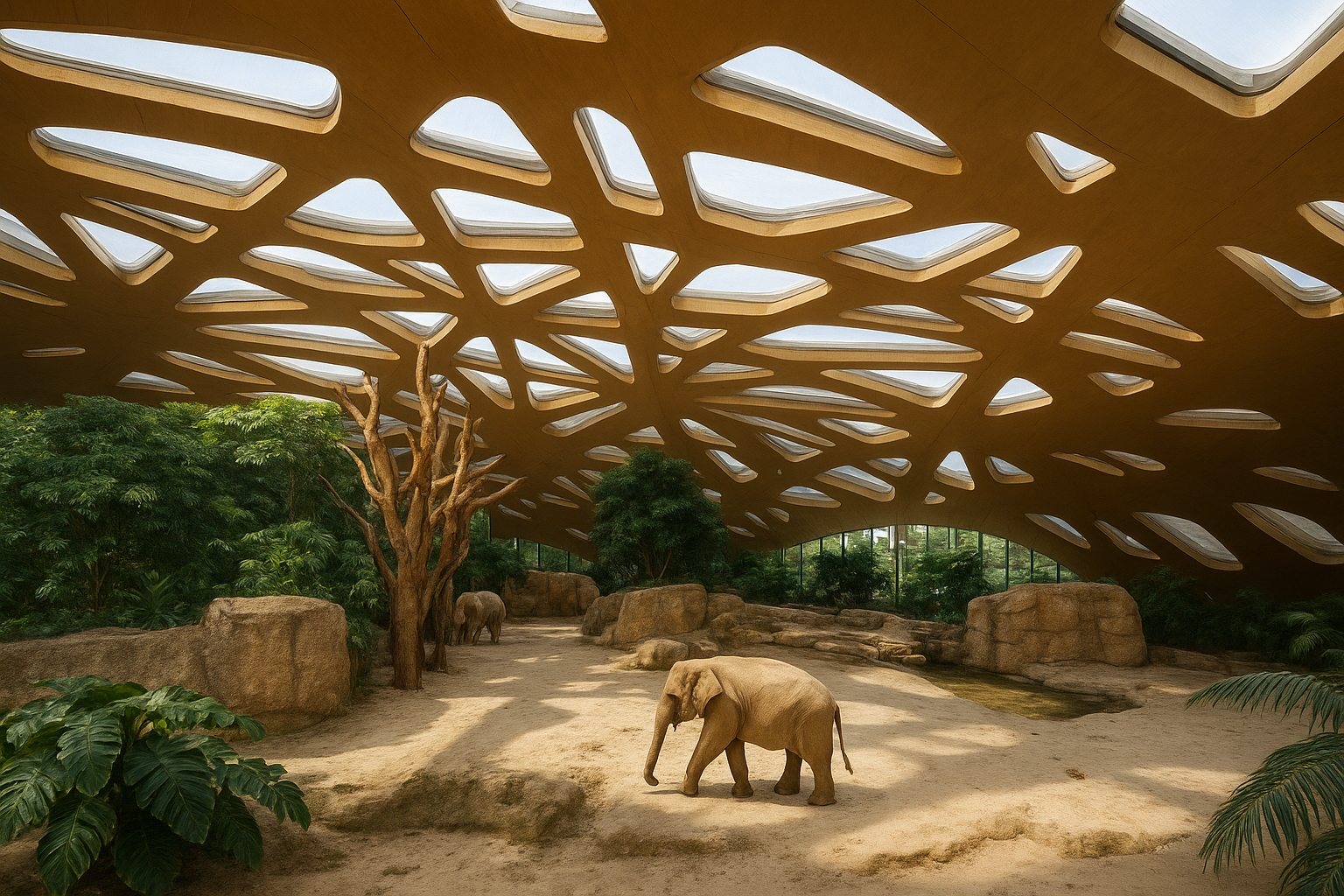
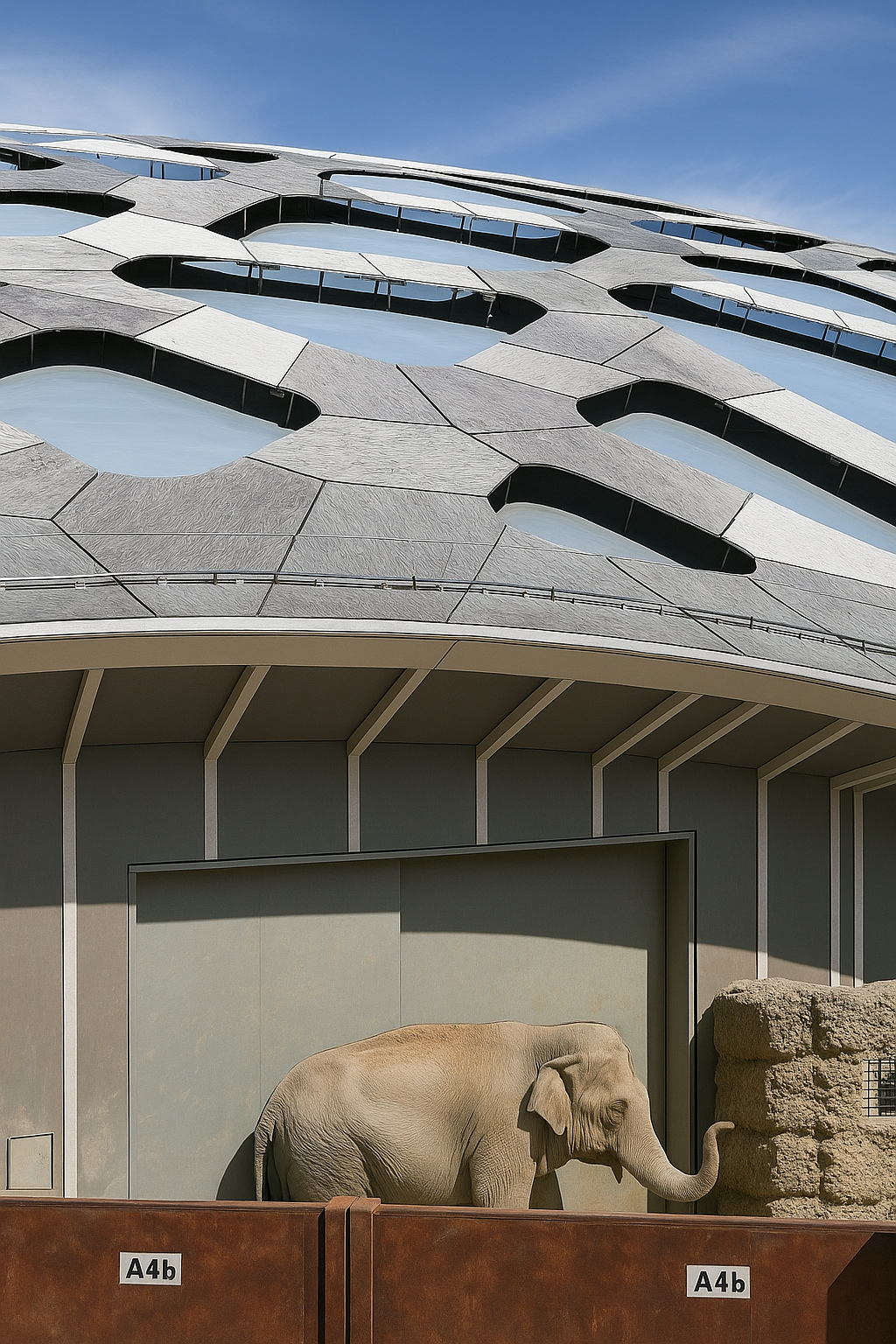
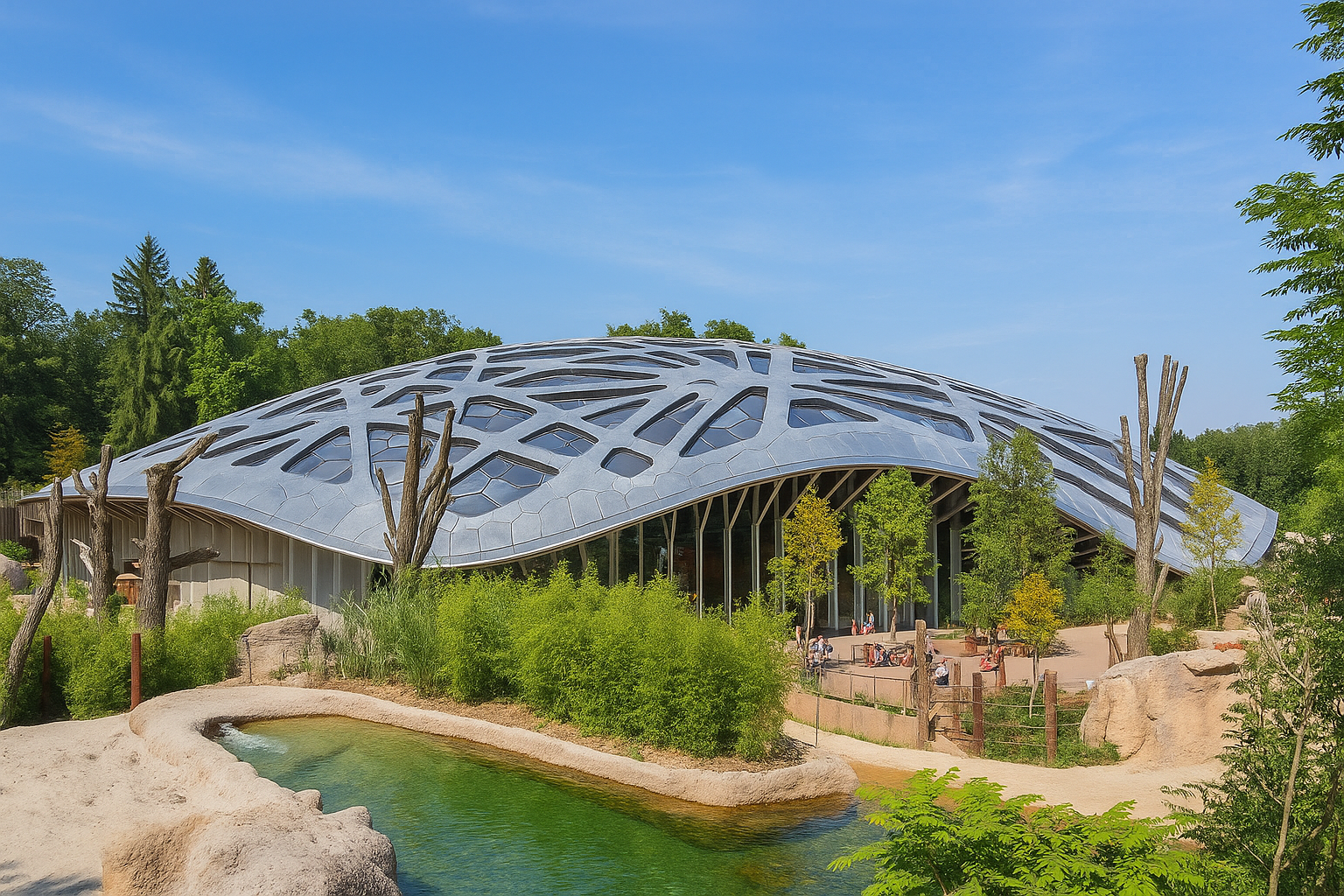
Zurich Zoo Elephant House and ETFE Foil Roofs
What are ETFE foil roofs? ETFE foil roofs are lightweight, transparent roofing systems made from Ethylene Tetrafluoroethylene (ETFE), a durable fluoropolymer material used in large-span architecture. At the Zurich Zoo Elephant House, ETFE foil roofs help create a bright indoor environment while supporting efficient climate control and reduced structural weight.
The Zurich Zoo Elephant House demonstrates how architecture can support animal welfare, visitor experience, and responsible building design at the same time. Lightspan supplied the ETFE cushion system that forms the building envelope and allows natural daylight to enter the habitat throughout the year.
How do ETFE foil roofs improve the Zurich Zoo Elephant House?
The roof structure uses Texlon® ETFE cushions to create a controlled indoor environment for elephants. Unlike conventional glazing, ETFE cushions are significantly lighter, allowing architects to span large areas with less supporting steel.
ETFE cushion systems and transparent roof structures
The transparent surface allows daylight to penetrate deep into the enclosure. ETFE also transmits ultraviolet light, helping create conditions closer to those found in natural outdoor habitats.
Lightweight roofing materials for large-span architecture
Because ETFE foil weighs only a fraction of glass, architects can design expansive roofs with reduced structural loads. This makes ETFE foil roofs a practical choice for zoos, botanical gardens, sports venues, and public buildings.
Why are ETFE foil roofs used in zoo architecture?
Zoo environments require a balance between animal comfort, visitor visibility, and energy efficiency. ETFE foil roofs help achieve these goals by allowing daylight while reducing the need for artificial lighting.
Sustainable building envelopes and climate control
The multi-layer cushion design provides insulation and helps maintain stable indoor temperatures. This contributes to lower operational energy requirements compared with some traditional roofing systems.
Daylight transmission and animal habitats
Natural lighting conditions are particularly important in habitats designed to replicate outdoor ecosystems. ETFE foil roofs support this objective while protecting animals and visitors from weather conditions.
What makes the Zurich Zoo Elephant House a benchmark for ETFE foil roofs?
The project is widely recognized as an example of how lightweight membrane architecture can create functional and visually distinctive spaces.
ETFE architecture in zoological and botanical projects
Projects such as the Zurich Zoo Elephant House demonstrate how ETFE technology can support large enclosed environments where daylight, visibility, and controlled climates are essential.
Are ETFE foil roofs durable and suitable for long-term use?
ETFE has been used in major architectural projects worldwide for decades. It resists UV radiation, corrosion, and environmental exposure, making it suitable for demanding public buildings.
How long do ETFE foil roofs typically last?
Most ETFE roofing systems are designed for decades of service when properly engineered and maintained.
Do ETFE foil roofs require less structural support?
Yes. Their low weight often reduces the amount of steel required compared with conventional glazed roof systems.
The Zurich Zoo Elephant House remains a strong example of how ETFE foil roofs can combine daylight access, structural efficiency, and habitat-focused design. Through Lightspan’s contribution, the project continues to influence the development of zoological, botanical, and public architecture around the world.