

ETFE Roof Details: Bevis Marks Roof Design Explained
What are ETFE roof details? ETFE roof details describe the structural, material, and installation elements that allow an ETFE roofing system to perform safely and efficiently. At Bevis Marks in London, these details include Texlon® ETFE cushions, a lightweight steel framework, precision-engineered fixing systems, and printed ETFE foil that manages daylight while maintaining transparency.
The Bevis Marks development demonstrates how carefully planned ETFE roof details improve weather protection, natural light, structural efficiency, and occupant comfort without adding unnecessary weight to the building.
How Do ETFE Roof Details Improve Building Performance?
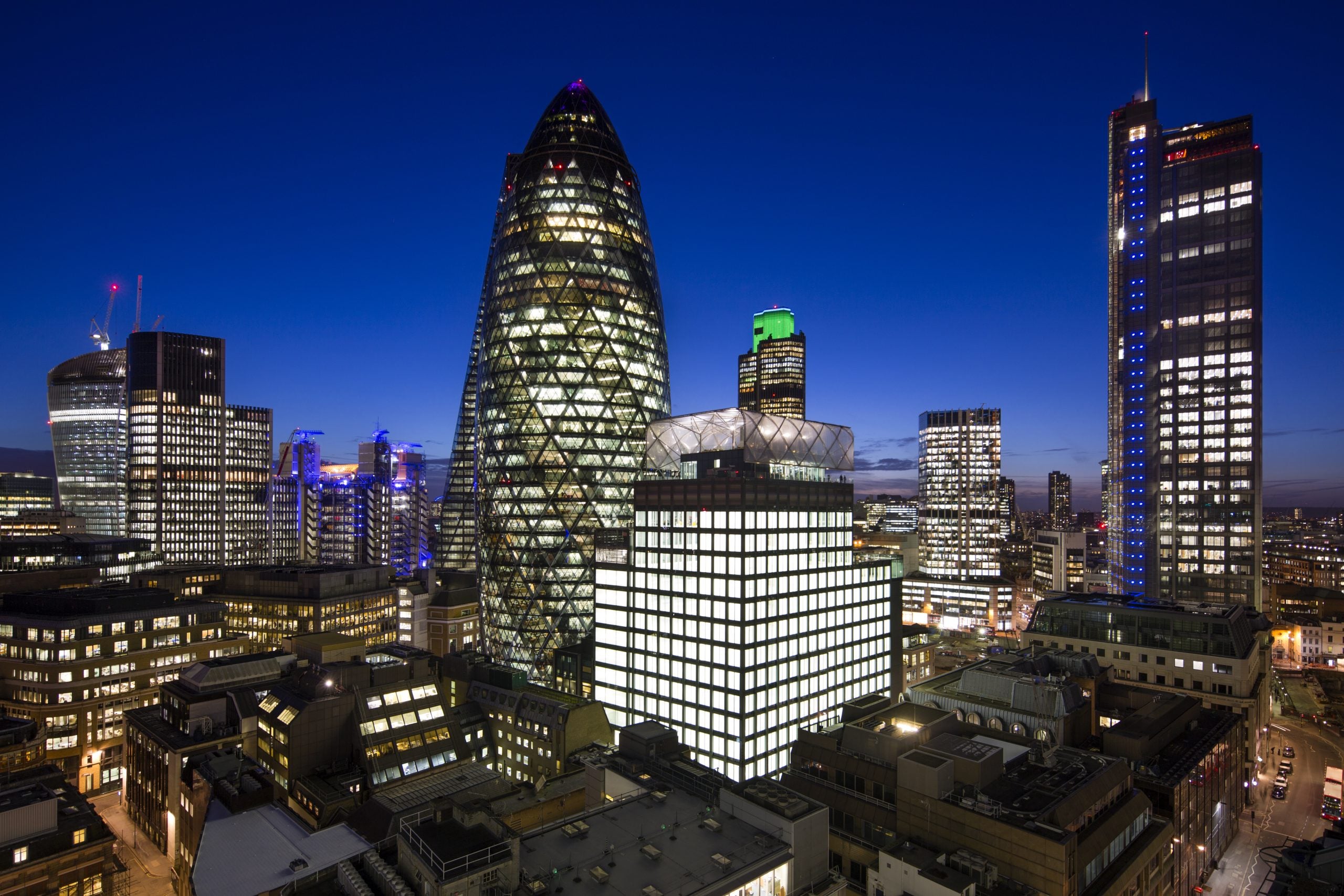
The ETFE roof canopy at Bevis Marks was designed by Fletcher Priest Architects and supplied and installed by Lightspan. The project includes 102 Texlon® ETFE cushions covering approximately 1,390 m², supported by a finely engineered steel structure.
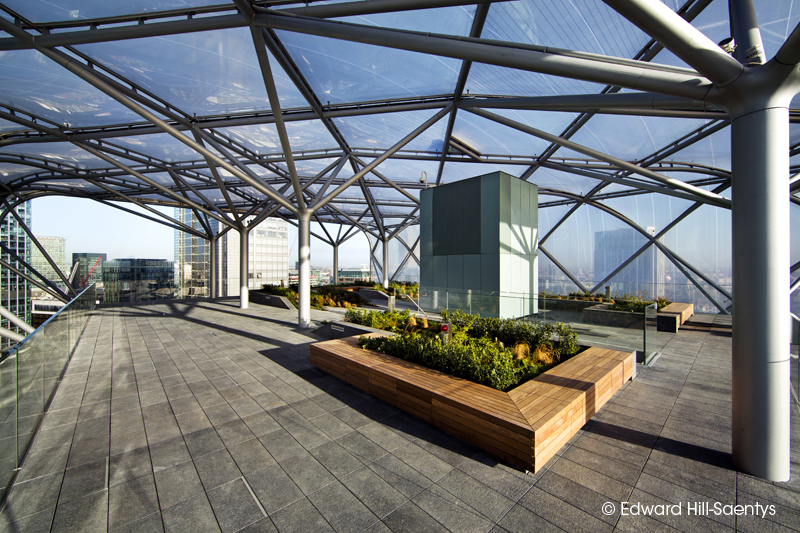
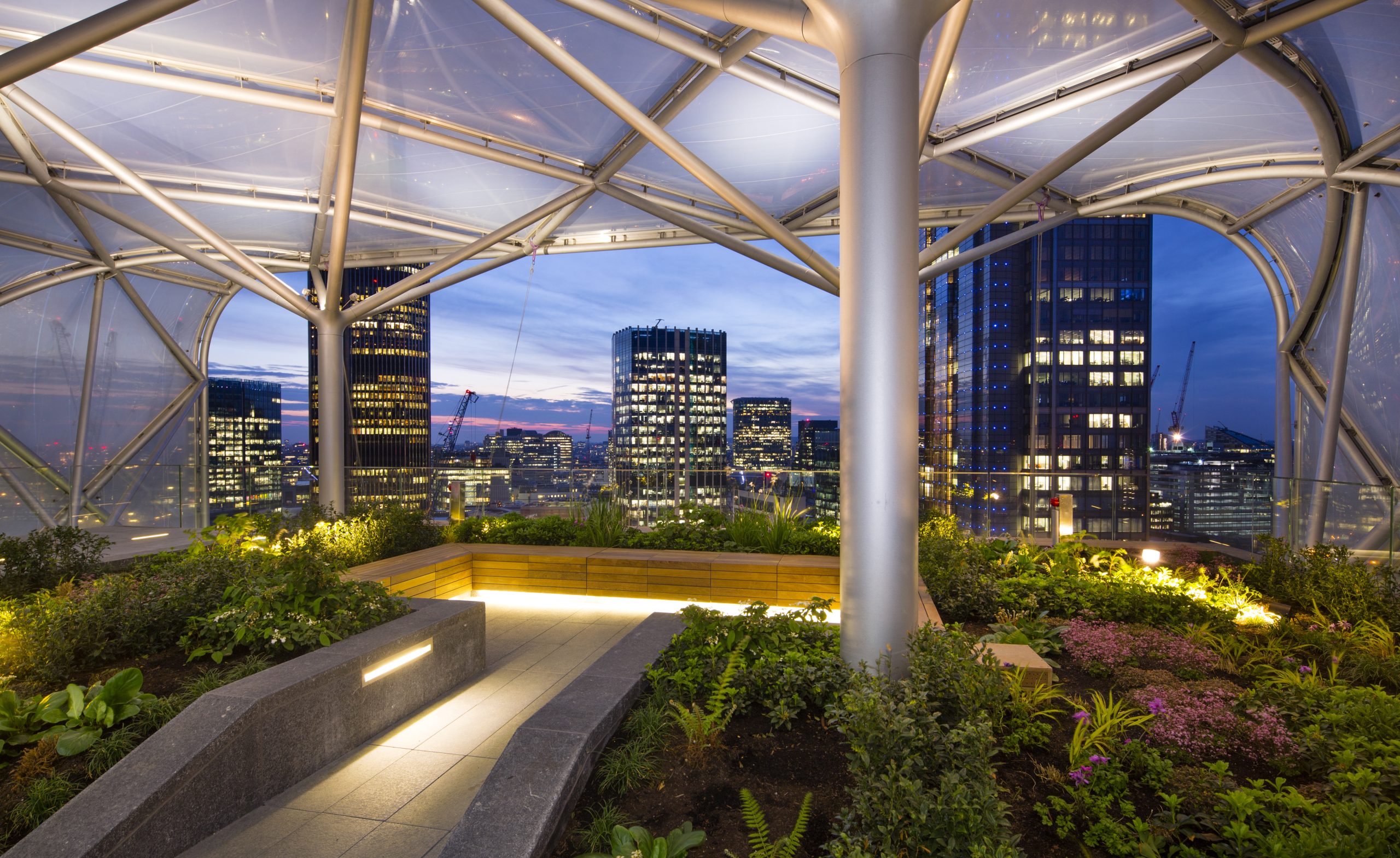
The roof protects two terraces with a combined area of 670 m² while remaining open on both ends to encourage natural ventilation. A dot-matrix printed ETFE surface reduces glare and solar gain without blocking daylight, creating comfortable outdoor spaces throughout the year.
ETFE Cushion Design
The roof uses pneumatic ETFE cushions that remain inflated at low pressure, providing thermal insulation while keeping the overall roof exceptionally light compared with conventional glazing.
Steel Support Structure
The supporting steel framework was carefully engineered to accommodate irregular geometries while maintaining minimal visual impact. This combination of lightweight steel and ETFE allows long spans with fewer structural supports.
What ETFE Roof Details Were Used at Bevis Marks?
One of the defining ETFE roof details is the combination of diamond-shaped and triangular Texlon® cushions.
Custom Geometry for Complex Roof Shapes
Every cushion was manufactured to match the architectural geometry, allowing the roof to follow the organic form of the terraces while maintaining consistent structural performance.
3D-Printed Connection Nodes
Lightspan collaborated with CDRM to develop custom 3D-printed nylon nodes. These components simplified complex connections between the ETFE cushions and steel frame while supporting the architectural appearance of the canopy.
Why Are ETFE Roof Details Important for Sustainable Buildings?
Well-designed ETFE roof details contribute to lower structural loads, efficient daylight use, and reduced material consumption.
The previous 1980s office complex was replaced with a 16-storey building offering approximately 16,500 m² of usable space and 1,100 m² of terraces. Around 59% of the existing structure was retained, reducing demolition waste and embodied carbon. The completed development is reported to be 80% more energy-efficient than its predecessor and achieved a BREEAM Excellent certification.
ETFE and Energy Efficiency
Because ETFE is significantly lighter than glass, supporting structures can often be smaller, reducing steel consumption. Printed ETFE layers also help regulate solar heat gain while maintaining excellent daylight transmission.
Long-Term Maintenance
ETFE foil has a smooth surface that naturally sheds dirt during rainfall, helping reduce maintenance requirements over the building’s lifetime.
What Can Architects Learn from These ETFE Roof Details?
Projects such as Bevis Marks show how detailed engineering and close collaboration between architects, structural engineers, and specialist ETFE contractors lead to durable roofing solutions for commercial developments.
Whether designing atriums, canopies, roof terraces, or large-span public spaces, properly engineered ETFE roof systems combine lightweight construction with weather protection and architectural flexibility.
For more information about our ETFE systems, visit our ETFE Roofing Solutions, Reference Projects, or Engineering Services pages.
For additional technical guidance, consult the European Association for ETFE Structures (EAES), BREEAM, and the Institution of Structural Engineers, which provide valuable information on ETFE design, structural engineering, and sustainable construction.