
ETFE Extrusions for the Verona fiere ETFE Canopy
What is ETFE extrusions? ETFE extrusions are precision-engineered aluminum profiles that hold and support ETFE foil systems in architectural projects. They create the structural framework for ETFE cushions, ensure secure fixation, accommodate thermal movement, and contribute to weather resistance. At Veronafiere in Italy, ETFE extrusions played a key role in supporting a large Texlon® ETFE canopy that combines structural efficiency with an eye-catching honeycomb design.
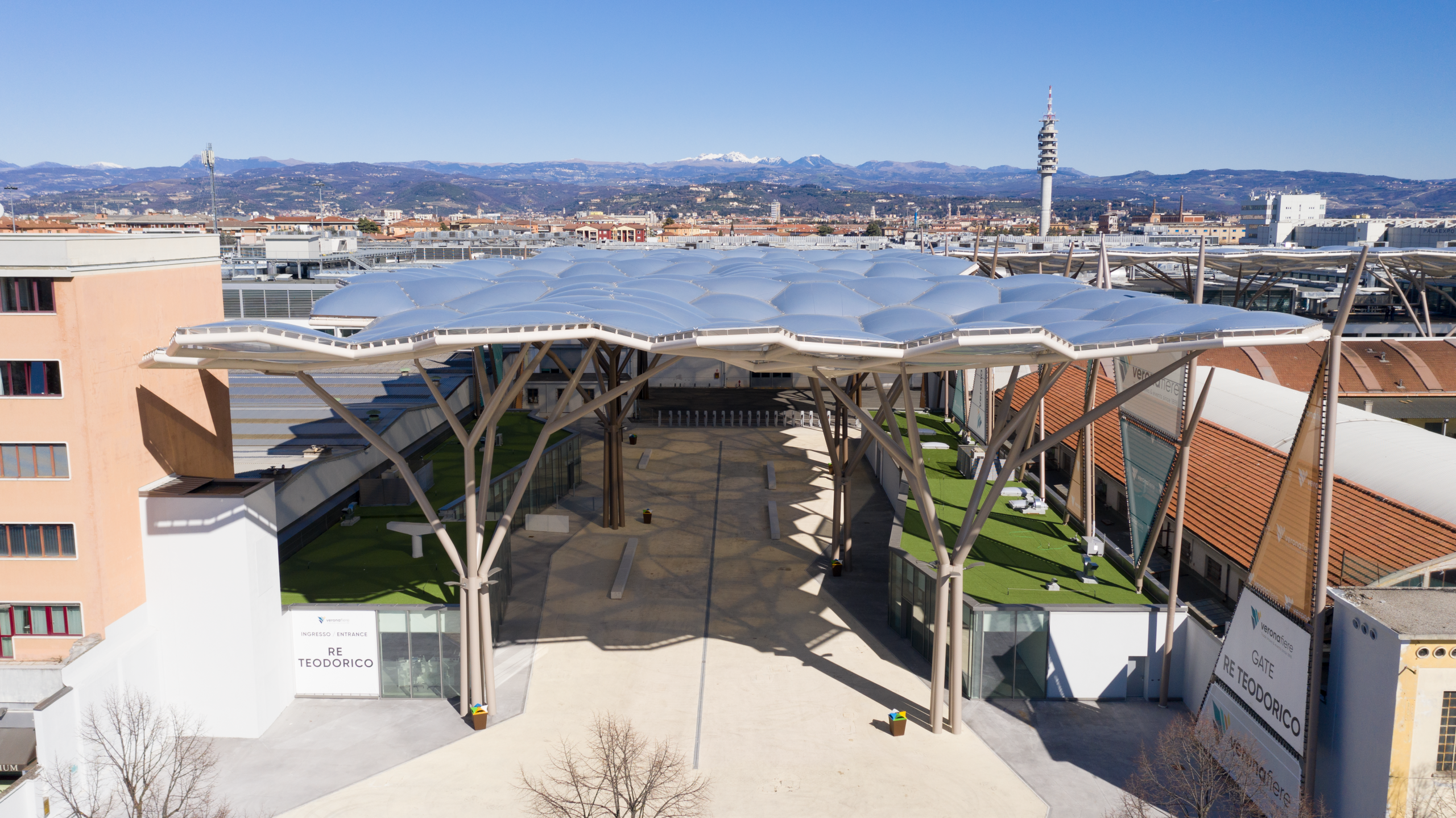
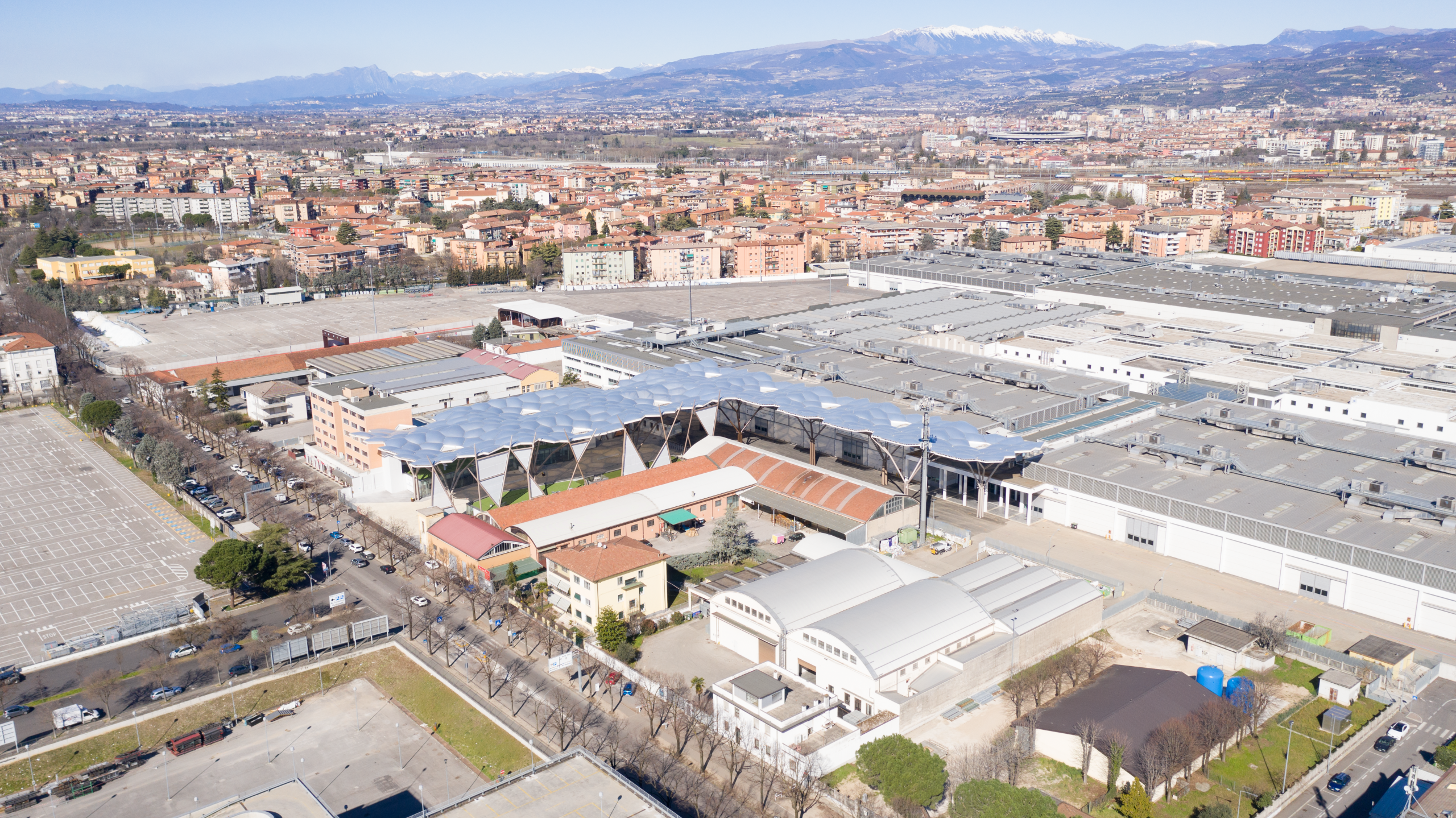
The redevelopment of the Re Teodorico entrance transformed the south plaza into a welcoming public space. Our team installed 6,654 m² of a two-layer Texlon® ETFE system supported by a custom steel structure and engineered ETFE extrusion profiles. The result is a lightweight roof that provides shade, daylight transmission, and protection from rain while maintaining an open atmosphere.
How do ETFE extrusions support ETFE canopy systems?
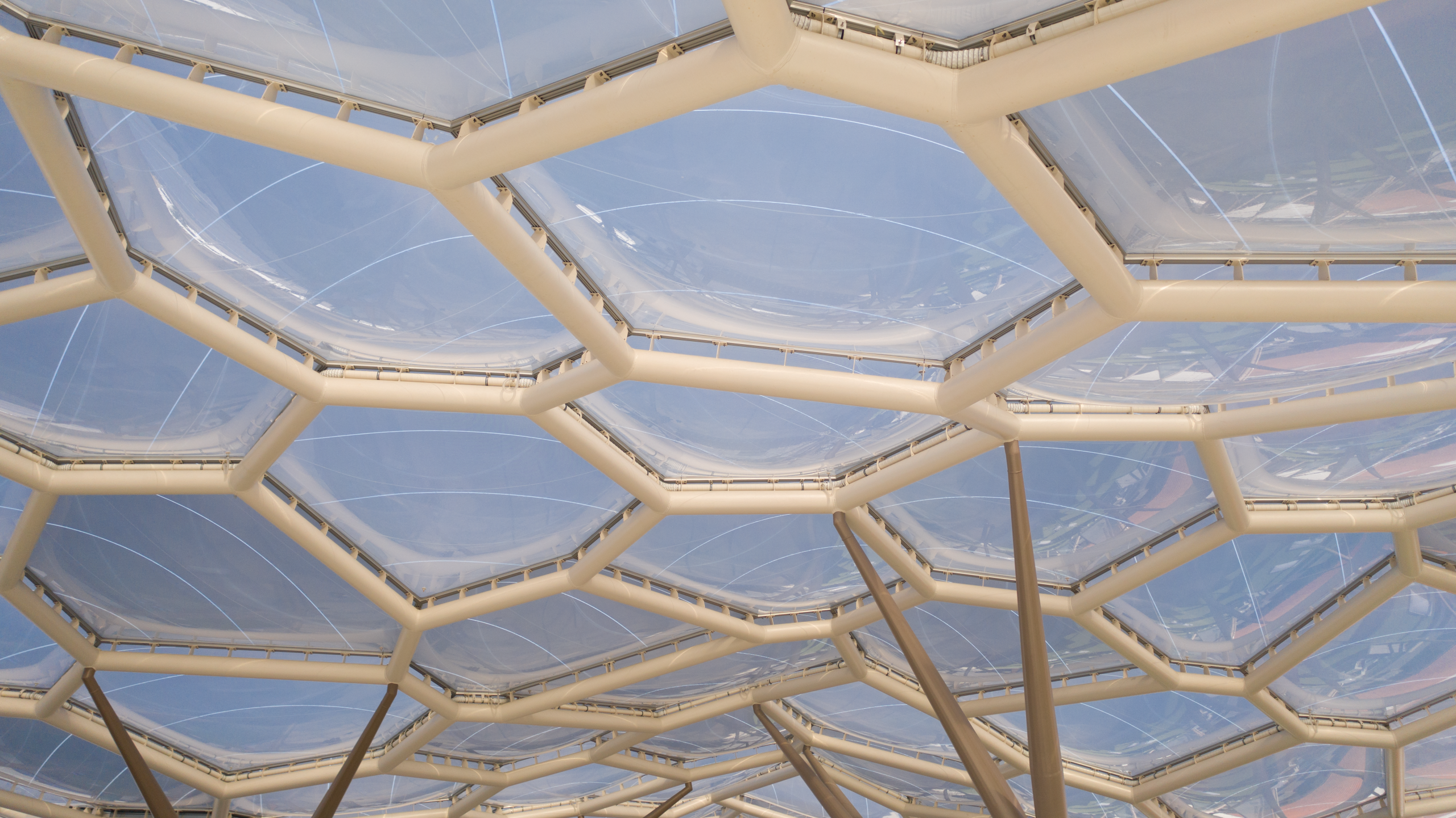
ETFE extrusion profiles form the connection between the supporting steel structure and the ETFE cushions. They securely clamp the foil, integrate inflation components, and help maintain long-term structural performance. More information about ETFE foil technology can be found from the ETFE Architecture section of the <a href=”/etfe-systems/”>ETFE Systems</a> page and from the <a href=”https://etfe.org/” target=”_blank” rel=”noopener”>ETFE Organisation</a>.
ETFE profiles and aluminum extrusion systems
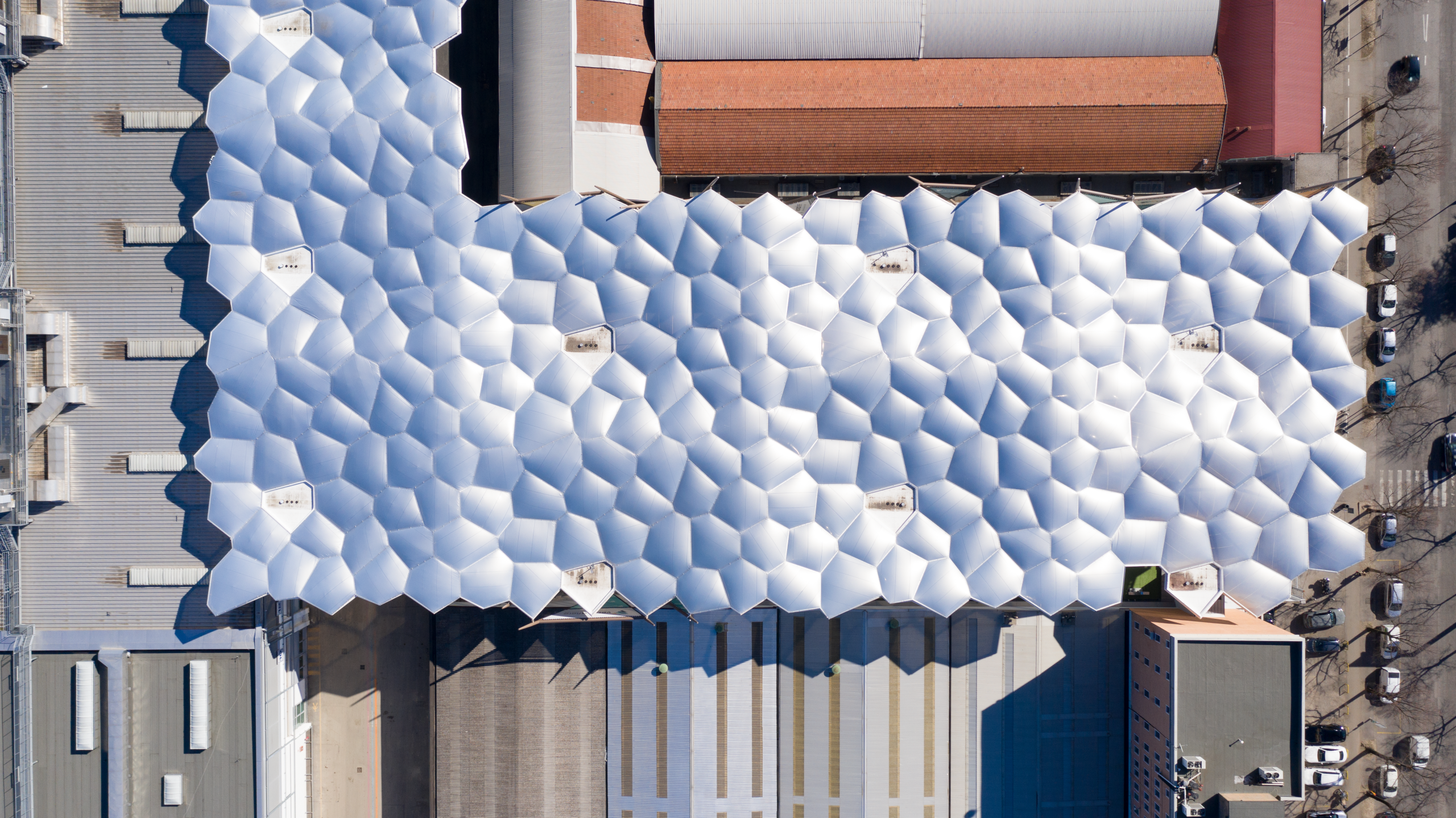
The Veronafiere canopy consists of 380 Texlon® ETFE cushions featuring three different print patterns. These printed layers create changing light and shadow effects throughout the day while preserving transparency. The custom aluminum extrusion system made it possible to realize the complex honeycomb geometry without compromising structural integrity.
Lightweight building envelopes with ETFE framing
Compared with conventional glazed roofs, ETFE systems require considerably less structural weight. ETFE extrusion profiles contribute to this efficiency by providing secure support with minimal material, reducing the overall load on the steel framework.
Why were ETFE extrusions chosen for the Veronafiere project?
The architectural concept required flowing roof geometry with varying heights for drainage and visual impact. ETFE extrusions offered the flexibility needed to manufacture curved sections while maintaining precise tolerances throughout the project.
Curved ETFE structures and freeform architecture
The wave-shaped roof demonstrates how ETFE systems can accommodate complex architectural forms. Through engineering refinements, the original design evolved into the desired three-dimensional effect while remaining practical to fabricate and install.
Structural glazing alternatives using ETFE
ETFE cushion systems supported by aluminum extrusions provide an alternative to conventional glass roofs where reduced weight, daylight transmission, and flexible geometry are priorities. Guidance on lightweight building envelopes is also available from the <a href=”https://www.istructe.org/” target=”_blank” rel=”noopener”>Institution of Structural Engineers</a>.
How did ETFE extrusions enable fast installation?
Meeting the construction schedule was essential because major events had already been planned at the exhibition center. Manufacturing included ETFE cutting plans, aluminum extrusion fabrication, printed foil production, and prefabricated components before installation began.
ETFE fabrication and installation process
Installation continued through Christmas and New Year, allowing the project to be completed within the required timeframe. The canopy also incorporates a carbon-fiber rainwater collection element with a 400 g/m² PVC mesh, demonstrating how ETFE extrusion systems integrate drainage into the overall design.
What makes ETFE extrusions suitable for large public buildings?
Large public spaces benefit from materials that reduce structural weight while creating comfortable environments. The completed canopy offers protection from sun and rain, allowing visitors to meet, wait, and move through the entrance in comfort.
Architectural membrane systems and façade engineering
Projects such as Veronafiere show how ETFE extrusion systems support long-span membrane architecture while enabling distinctive visual identities. After more than 1,500 completed ETFE projects, our engineering experience helps transform complex concepts into practical construction solutions.
Does ETFE extrusions improve durability?
Yes. Properly engineered ETFE extrusions securely retain the foil, manage structural movement, simplify maintenance, and contribute to the long-term performance of ETFE cushion systems.
Can ETFE extrusions be used for custom architectural designs?
Yes. ETFE extrusion profiles can be manufactured in different geometries to support curved roofs, façades, skylights, atriums, and other freeform architectural applications.