
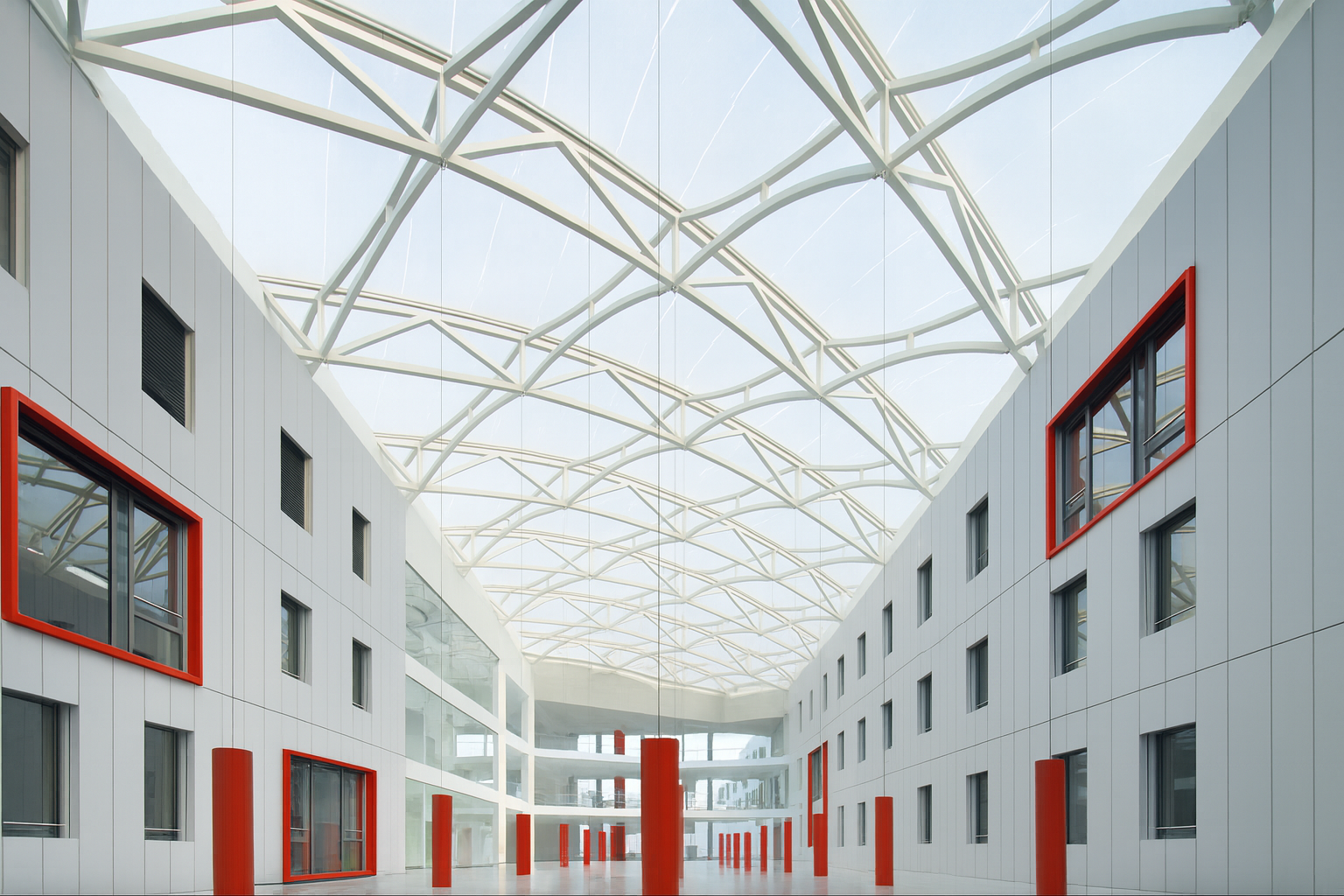

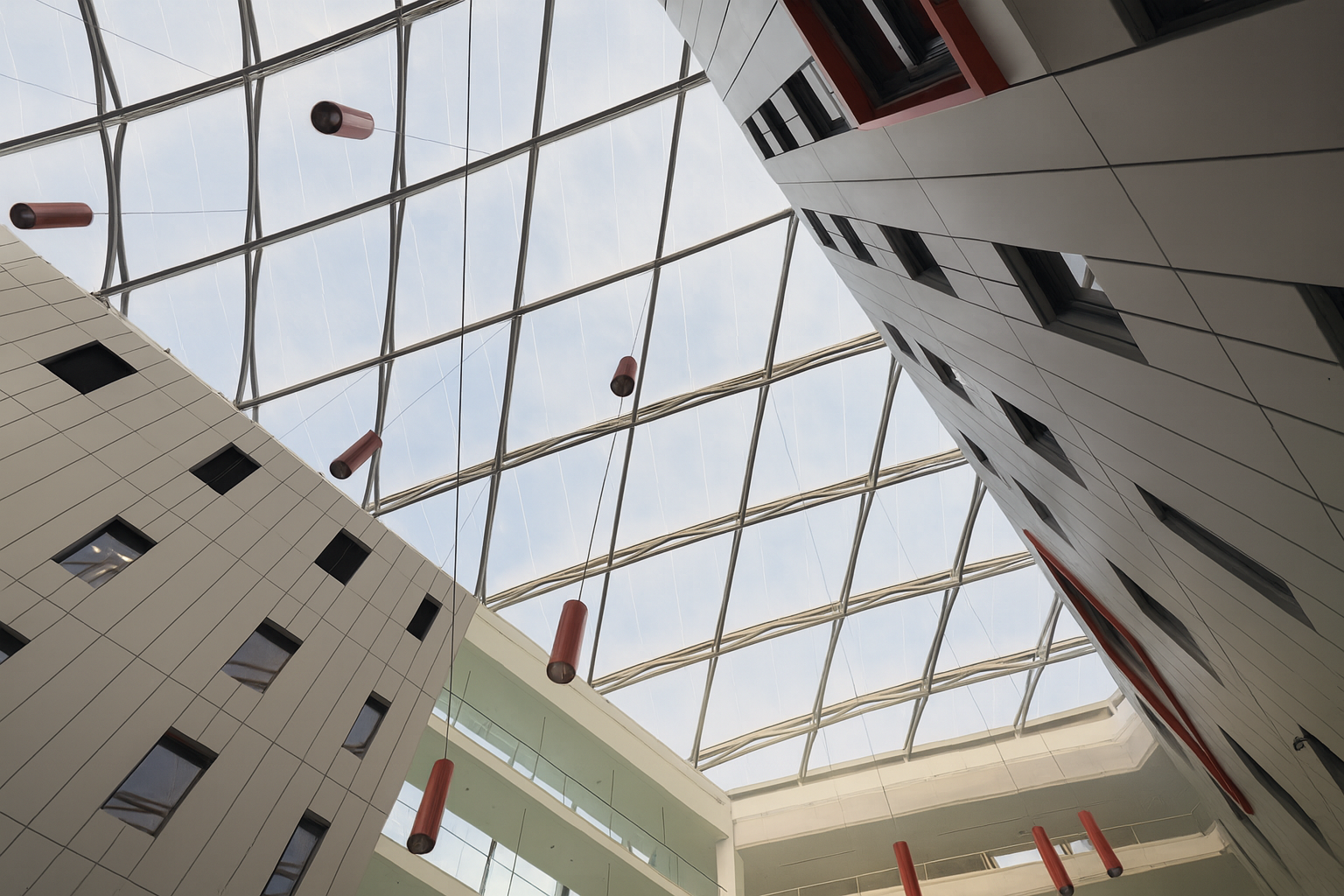

ETFE Pillows at Frankfurt HOLM Lightspan
What is ETFE pillows? ETFE pillows are lightweight, air-inflated cushions made from multiple layers of ETFE (Ethylene Tetrafluoroethylene) foil. They are widely used in contemporary architecture because they provide excellent daylight transmission, thermal insulation, and reduced structural weight. The Frankfurt HOLM Lightspan ETFE pillows demonstrate how this technology creates bright, efficient spaces while supporting sustainable building design.
How do ETFE pillows work in the Frankfurt HOLM Lightspan system?
The Frankfurt HOLM Lightspan ETFE system represents the combination of engineering, architecture, and energy-conscious construction. Located near Frankfurt Airport, the House of Logistics and Mobility features ETFE pillows that are continuously inflated with low air pressure. This air cushion keeps the roof stable while maintaining insulation and allowing natural daylight to illuminate the interior.
Unlike conventional glass roofs, ETFE pillows require less supporting steel, making the overall structure lighter and more resource-efficient. Learn more about ETFE materials from the <a href=”https://www.vector-foiltec.com” target=”_blank” rel=”noopener”>Vector Foiltec</a> website.
ETFE cushions and transparent roofing systems
ETFE cushions are commonly used in stadiums, atriums, airports, and research facilities. Their transparent surface lets in up to 95% of daylight while helping reduce artificial lighting during daytime hours.
Lightweight architectural membranes
Because ETFE weighs significantly less than glass, architects can design larger spans with fewer supporting elements. This creates open interiors with unobstructed views and increased design flexibility.
Why are ETFE pillows used in sustainable architecture?
The Frankfurt HOLM project demonstrates how ETFE pillows contribute to lower material consumption and improved building efficiency. Their recyclable material, long service life, and self-cleaning surface reduce maintenance while supporting environmental goals.
For additional information about sustainable building practices, visit the <a href=”https://www.usgbc.org” target=”_blank” rel=”noopener”>U.S. Green Building Council</a>.
Energy-efficient building envelopes
Natural daylight, thermal insulation, and lightweight construction help reduce operational energy demand throughout the building’s lifespan.
Durable ETFE roofing solutions
ETFE resists UV radiation, weathering, and environmental pollution, allowing the roof to maintain clarity for many years.
What makes ETFE pillows different from glass roofs?
Glass provides rigidity, while ETFE pillows offer flexibility, lower weight, and easier installation over large spans. Their air-filled design also improves insulation without adding excessive structural load.
Are ETFE pillows suitable for public buildings?
Yes. ETFE pillows are widely used in airports, botanical gardens, sports venues, and innovation centers because they combine daylight performance with structural efficiency.
Where can you learn more about ETFE pillows?
If you would like to explore additional ETFE projects, visit our Projects, ETFE Systems, or Architecture Solutions pages to see how ETFE technology is applied across different building types.