
Engineering Excellence
At Lightspan, engineering is the backbone of every project. Our team combines technical precision with innovative solutions, ensuring that each structure is safe, efficient, and built to last.
ETFE Cushions Architecture: Engineering Excellence
What is ETFE cushions architecture? ETFE cushions architecture refers to the use of lightweight, air-supported ETFE foil cushions as part of roofs, façades, and building envelopes. The system combines transparent ETFE membranes with supporting structures to create lightweight enclosures, often for large-span and geometrically complex buildings. At Lightspan, engineering is the backbone of every project, connecting architectural concepts with safe, feasible, and buildable ETFE structures.
ETFE Cushions Architecture: How Does Engineering Turn Concepts into Structures?
Engineering transforms architectural ideas into real structures. At Lightspan, engineers work closely with designers and clients to evaluate geometry, structural requirements, materials, interfaces, and environmental conditions from the beginning. This approach helps ensure that ETFE cushion systems are practical, efficient, and ready for fabrication and installation.
Our ETFE in architecture expertise covers roofs, façades, skylights, and large building envelopes where low structural weight and controlled daylight are important.
Engineering at Lightspan
Pneumatic ETFE Cushions and Lightweight Building Envelopes
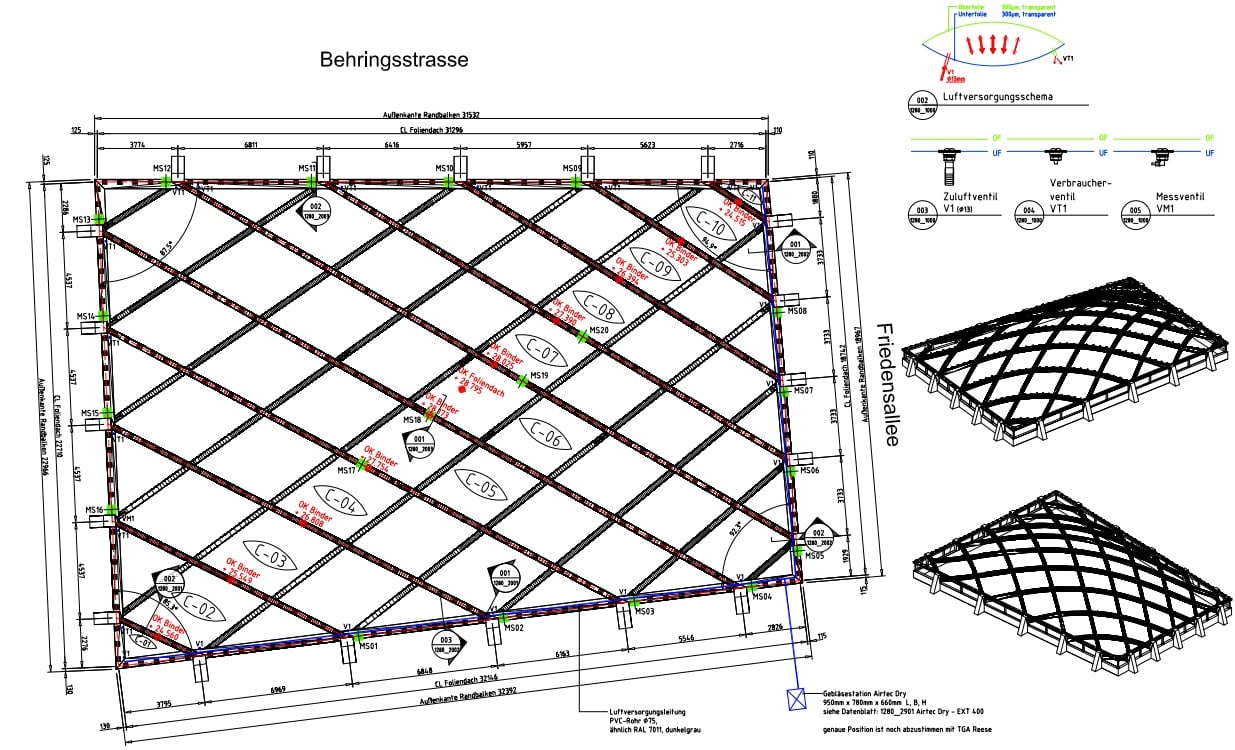
ETFE cushions normally consist of multiple layers of foil that are welded around their perimeter and inflated with low-pressure air. The air pressure gives the cushions their form and allows them to transfer wind and snow loads to the surrounding support structure. Depending on the design, cushions can also incorporate printing or shading patterns to influence solar transmission and daylight.
ETFE Foil Systems and Structural Coordination
Engineering is not limited to the cushion itself. Connections between ETFE foil, aluminium profiles, steel structures, drainage, and adjacent façade elements must work together. Lightspan therefore combines structural modelling, digital planning, simulations, and detailed coordination before fabrication. Our ETFE Engineering Service supports this process from concept through completion.
ETFE Cushions Architecture: Why Are Simulations and Testing Important?
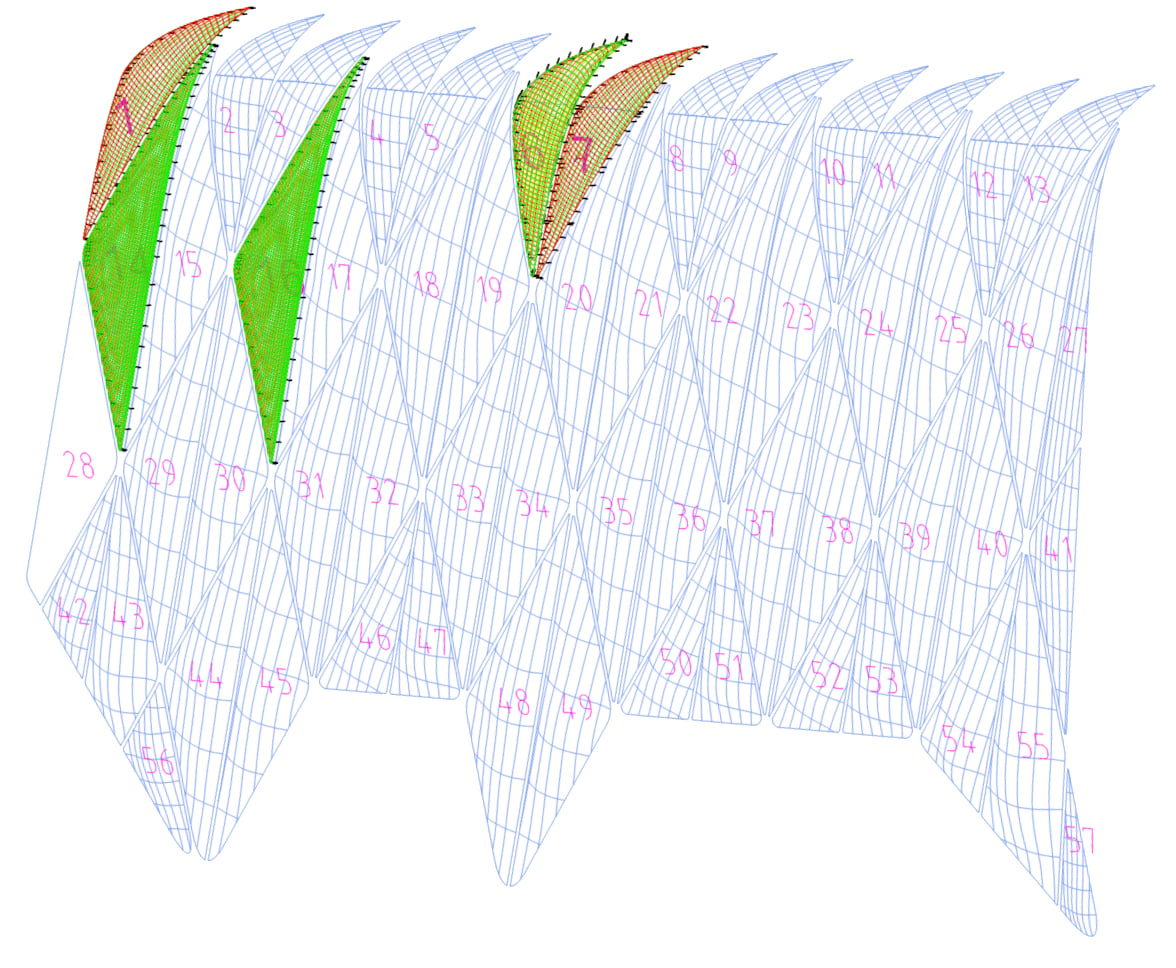
Advanced modelling and simulation methods help engineers identify structural and geometric challenges before construction begins. Load conditions, cushion geometry, support structures, and interfaces can be evaluated digitally, helping reduce construction risks and improve coordination between disciplines.
ETFE Building Envelopes and Digital Engineering
Lightspan uses digital design and engineering workflows to develop accurate solutions for complex ETFE geometries. This is particularly important for large roofs, façades, atria, and freeform structures where many individual components must align precisely. Further information on our design and digital planning approach is available on our website.
ETFE Cushions Architecture: How Does Lightspan Deliver Projects?
Every project moves from concept to engineering, fabrication, installation, and completion. Lightspan coordinates these stages with architects, contractors, and specialist suppliers. Our ETFE fabrication capabilities connect engineering decisions directly with production and installation requirements.
ETFE Cushion Roofs and Façades in Real Projects
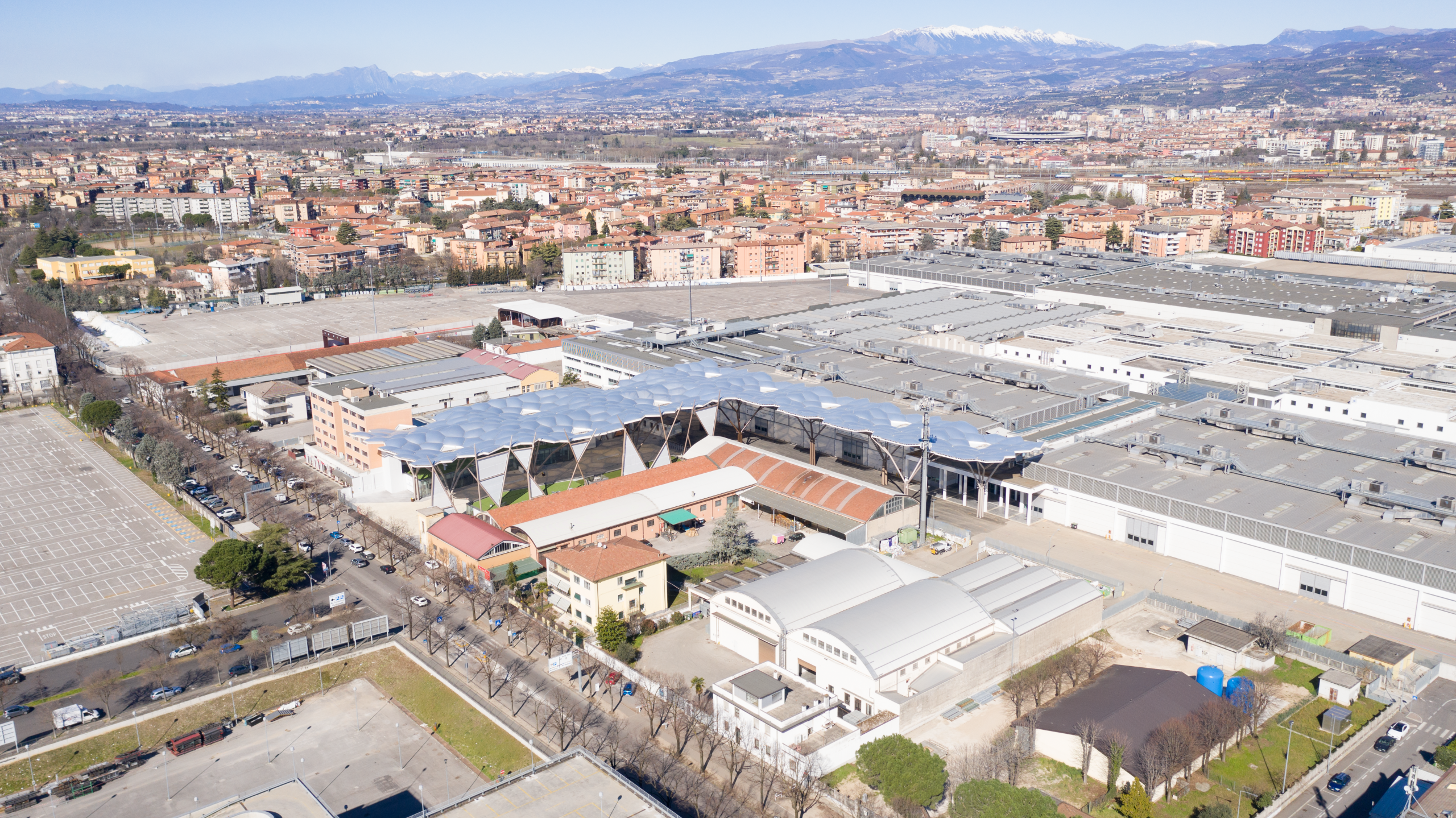
Lightspan’s international project experience includes large-span roofs, stadiums, atria, transport buildings, and complex façades. The ARTIC ETFE roof project demonstrates how detailed engineering, BIM coordination, and accurate connections support complex ETFE architecture.
What Makes ETFE Cushions Architecture Different?
ETFE cushion systems combine low material weight, high transparency, flexible geometry, and pneumatic structural behaviour. Their performance depends on the complete system—not only the foil—making engineering, detailing, fabrication, and installation essential parts of the architectural solution.