




Translucent ETFE: Norway’s Largest School Receives a Texlon® ETFE Roof
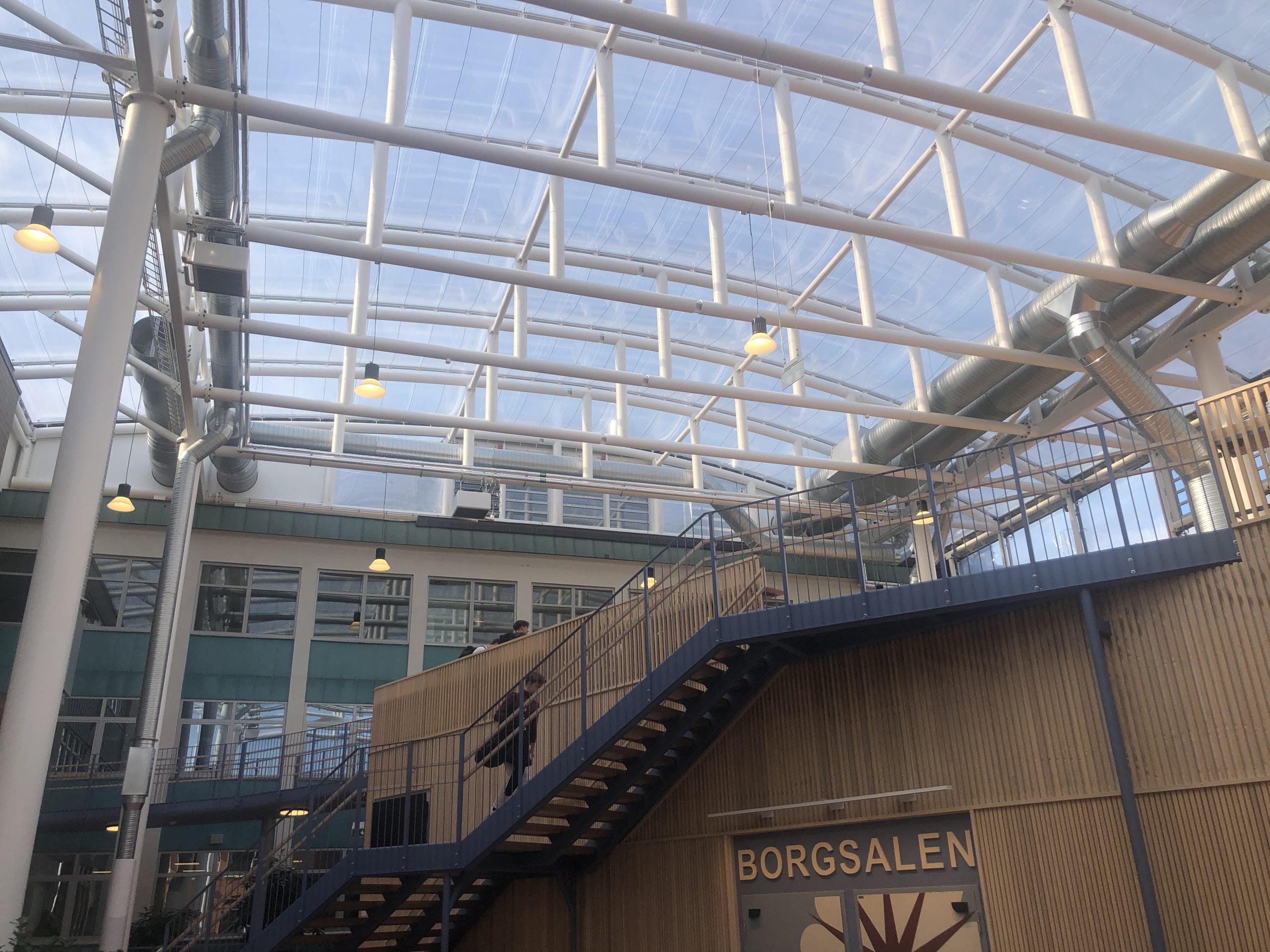
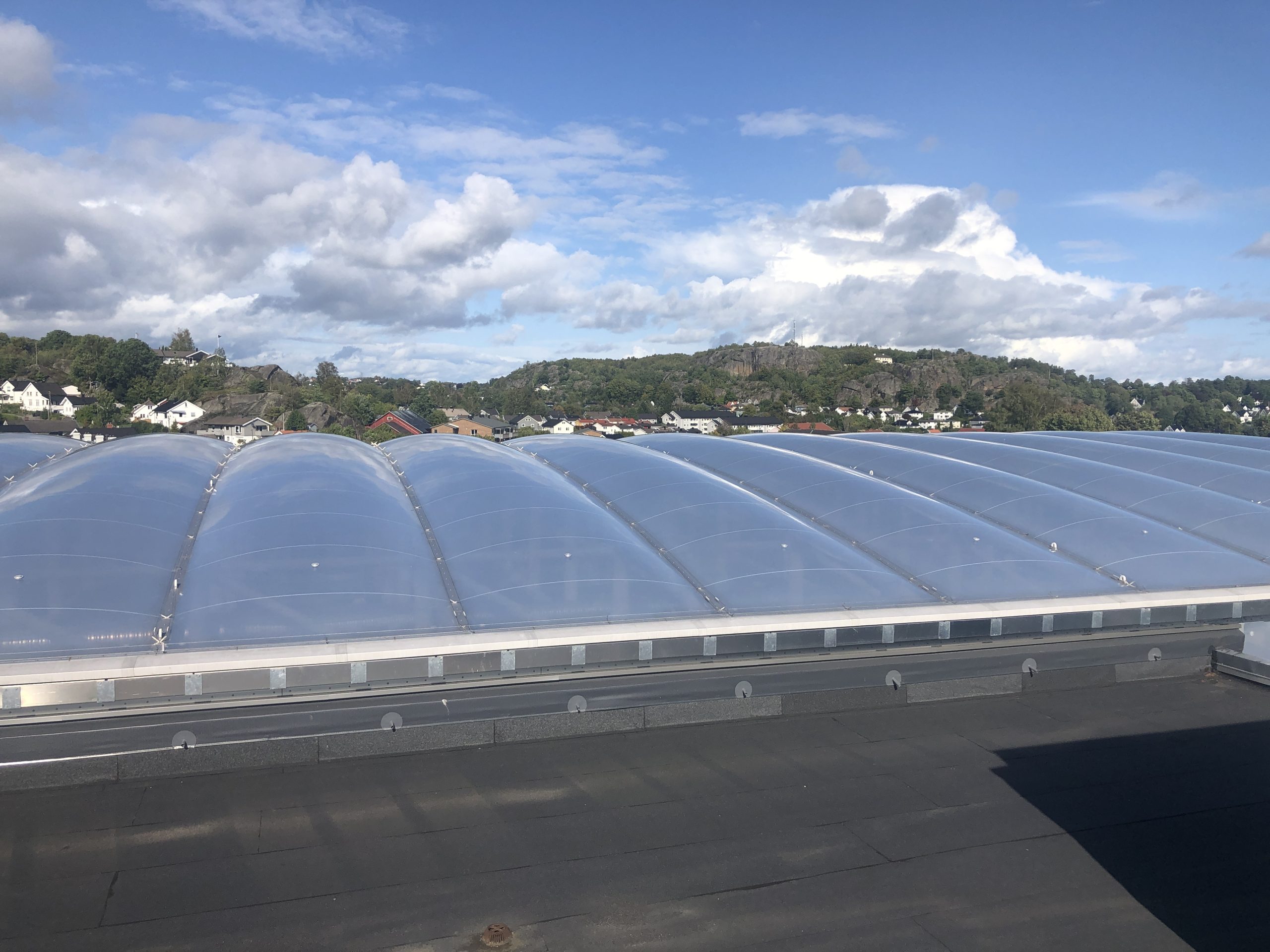
What is translucent ETFE? It is ETFE foil used in building envelopes to transmit natural daylight while controlling solar energy and thermal performance. Translucent ETFE can be configured as lightweight single-layer membranes or multi-layer cushions, making it suitable for large roofs and atriums. At Sandefjord Upper Secondary School (SVGS) in Norway, a four-layer Texlon® ETFE roof transforms the existing courtyard into a year-round recreational space.
Translucent ETFE at SVGS – What was the roof designed to achieve?
In 2022 and 2023, Norway’s largest secondary school underwent a comprehensive renovation. Much of the existing building dates from the 1950s and required technical upgrades, additional capacity and more flexible educational spaces. The covered courtyard connects several school buildings and provides pupils with a place to meet, learn and spend breaks while remaining protected from the weather.
The new Texlon® ETFE roof allows the courtyard to be used throughout the year without losing access to natural daylight. The project is also an example of how ETFE roof systems can be integrated into renovation projects where structural weight is an important consideration.
Transparent ETFE foil and natural daylight
ETFE is a fluoropolymer film with high light transmission. Its optical properties are one reason it is used for atriums, roofs and façades. Technical information from Chemours on ETFE film properties confirms its high transmission and resistance to outdoor exposure.
How does translucent ETFE control daylight?
Translucency does not mean uncontrolled solar gain. ETFE foil can incorporate printed patterns that reflect part of the solar radiation while retaining daylight. This allows the roof to balance natural illumination, glare and heat gain.
Translucent ETFE in cold climates – How is thermal performance improved?
Translucent ETFE: What Is Translucent ETFE?
Norway’s climate made thermal performance a key consideration. The SVGS cushions use four ETFE layers to improve insulation and create a more comfortable internal environment. The number of layers can be adapted to project-specific U-value requirements.
ETFE cushion systems and thermal insulation
Multi-layer cushions create air-filled chambers between the foils. This lightweight construction can provide improved thermal performance without the structural weight associated with large areas of glass. Lightspan’s ETFE system guide explains how cushion layers, foil thickness and air pressure are engineered according to project requirements.
Why use ETFE for renovation projects?
ETFE is particularly relevant where an existing structure has limited load capacity. Its low weight can reduce additional structural loads while still creating a weather-protected roof. At SVGS, the courtyard renovation contributed to reported energy savings of at least 20%, while daylight entering through the roof can also reduce reliance on artificial lighting.
Translucent ETFE and solar control – How does it work?
The g-value describes the amount of solar energy entering a building. Printed ETFE patterns can reduce solar transmission and help prevent overheating during periods of strong solar radiation. This makes the system suitable for different climates, from cold Nordic environments to warmer regions.
Lightweight ETFE roofing for large atriums
The SVGS Courtyard demonstrates how ETFE can combine daylight, thermal considerations and low structural weight within a large renovation project. The result is a flexible indoor space that connects the existing buildings while retaining an open, outdoor character.
Translucent ETFE FAQ – What should architects know?
What is ETFE?
ETFE foil configured to transmit natural light while managing solar radiation. It is commonly used in roofs, façades, atriums and large-span building envelopes.
Is ETFE suitable for cold climates?
Yes. Multiple ETFE layers can improve thermal performance, while printed foil can help control solar gain during warmer periods.
Can ETFE be used for renovations?
Yes. Its low structural weight makes ETFE particularly useful when an existing building has limited additional load capacity.